

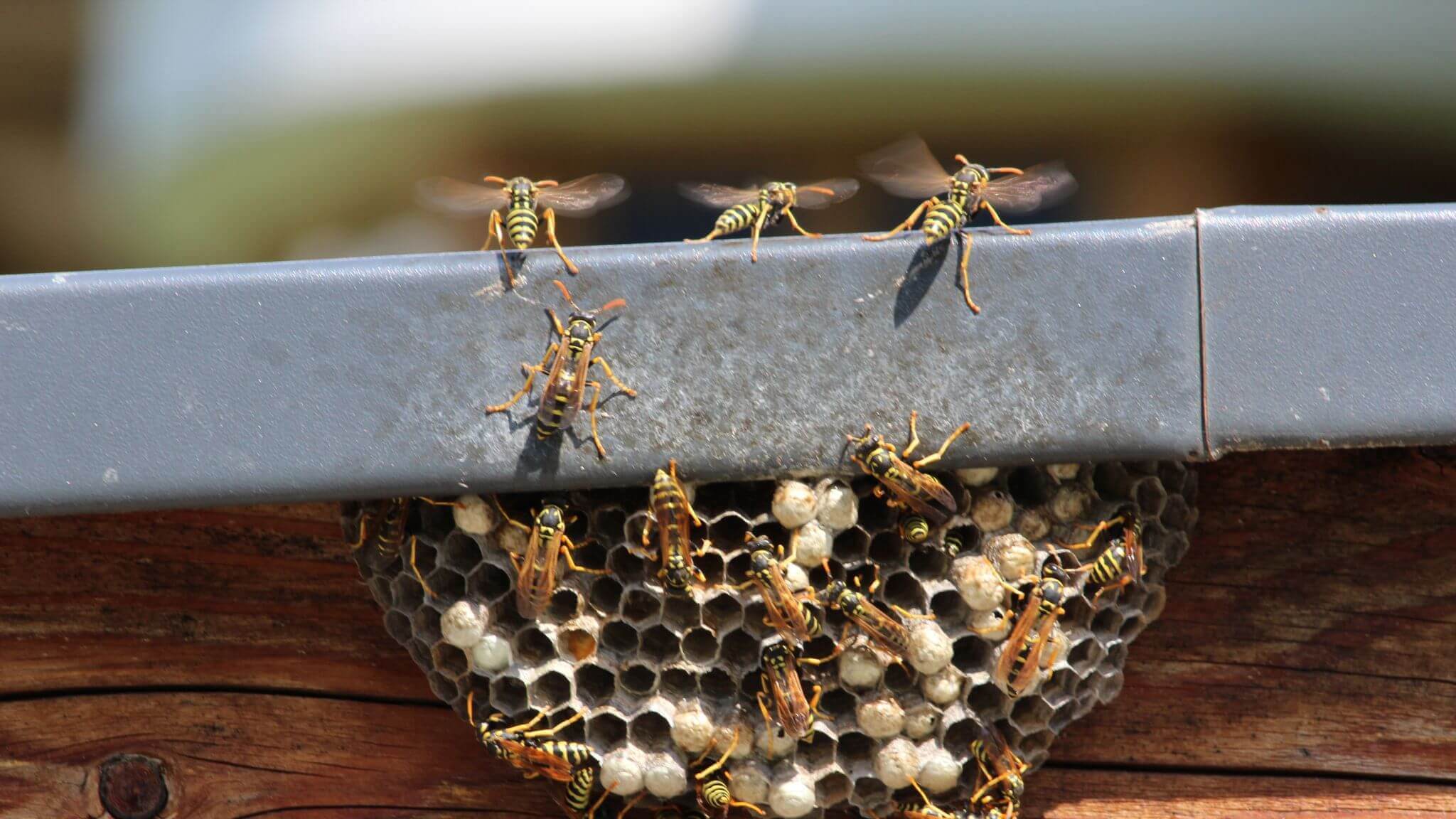
If you have noticed wasp activity increasing around your home during the summer, especially near eaves, rooflines, fences, or patios, there’s a clear reason behind it. Wasps are strategic when choosing nesting spots, and these areas provide exactly what they need to survive and grow.
In summer, wasps build nests around these structures because they offer protection from harsh weather, wind, and predators. At the same time, man-made features like roof edges and fence corners closely mimic natural nesting environments, giving wasps stable surfaces to anchor their paper-like nests. These areas also provide easy access to nearby food sources such as garden insects and leftover human food, making them ideal for growing colonies.
Homeowners who understand these patterns—especially those already planning seasonal pest prevention like the best time for pest control in Texas during spring are far more likely to avoid serious infestations later in the season.
Call Brady Pest Control today if you’re noticing wasp activity around your roofline or patio before nests become established.
Why Wasps Choose Eaves, Rooflines, Fences, and Patios
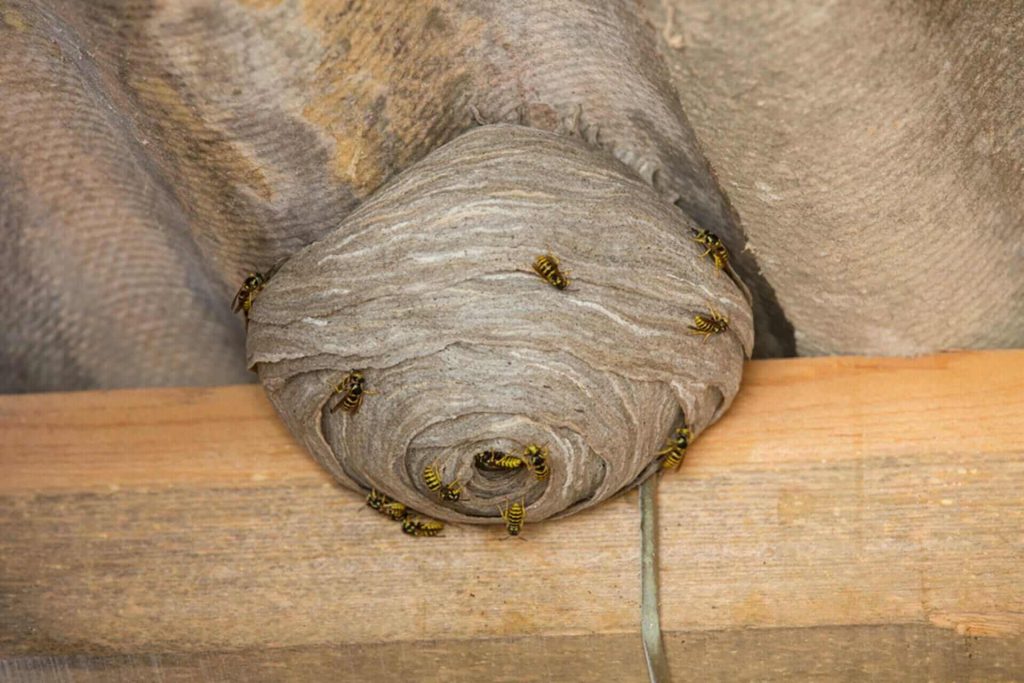
Shelter and Shade
Texas summers are extremely hot, and wasps actively seek shaded areas to protect their nests. Eaves and rooflines provide:
- Constant shade from direct sunlight
- Protection from heavy rain and storms
- Reduced exposure to strong winds
These conditions allow colonies to grow without environmental stress.
Quiet, Undisturbed Spaces
Wasps prefer areas where they won’t be disturbed frequently. Common hidden nesting spots include:
- Under porch ceilings
- Beneath deck boards
- Fence corners and joints
- Behind shutters or trim
These locations give wasps the security they need to expand their colonies unnoticed.
Call now for a wasp inspection if you’re seeing activity in these quiet areas around your home.
Strong Structural Support
Wasps build paper-like nests that require a stable surface. Structures like:
- Roof edges
- Wooden fences
- Patio beams
- Exterior wall corners
Provide solid attachment points that keep nests secure even during storms.
Easy Access to Food
Food availability is one of the biggest reasons wasps stay close to homes:
- Patios often have sugary drinks and food scraps
- Gardens provide insects like caterpillars and aphids
- Outdoor trash bins attract scavenging wasps
This combination of protein and sugar sources makes residential areas ideal nesting zones.
If you’re unsure which species you’re dealing with, reviewing common types of wasp in Texas can help identify their behavior and nesting habits.
Common Wasp Species Around Texas Homes
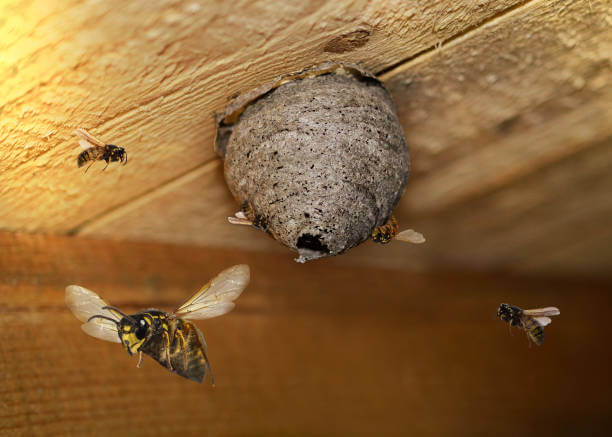
Different wasp species prefer slightly different nesting locations, but many are commonly found around residential structures.
Red Wasps
Red wasps are one of the most aggressive species in Texas and often build nests under eaves and rooflines. Learn more about their behavior in red wasp Texas.
Black Wasps
Black wasps are typically less aggressive but still build nests in sheltered outdoor areas. Their habits are explained in detail in black wasp Texas.
Understanding which species you’re dealing with helps determine the right treatment approach.
Schedule professional wasp removal if you’re unsure which species is nesting around your home.
Early Warning Signs of Wasp Activity
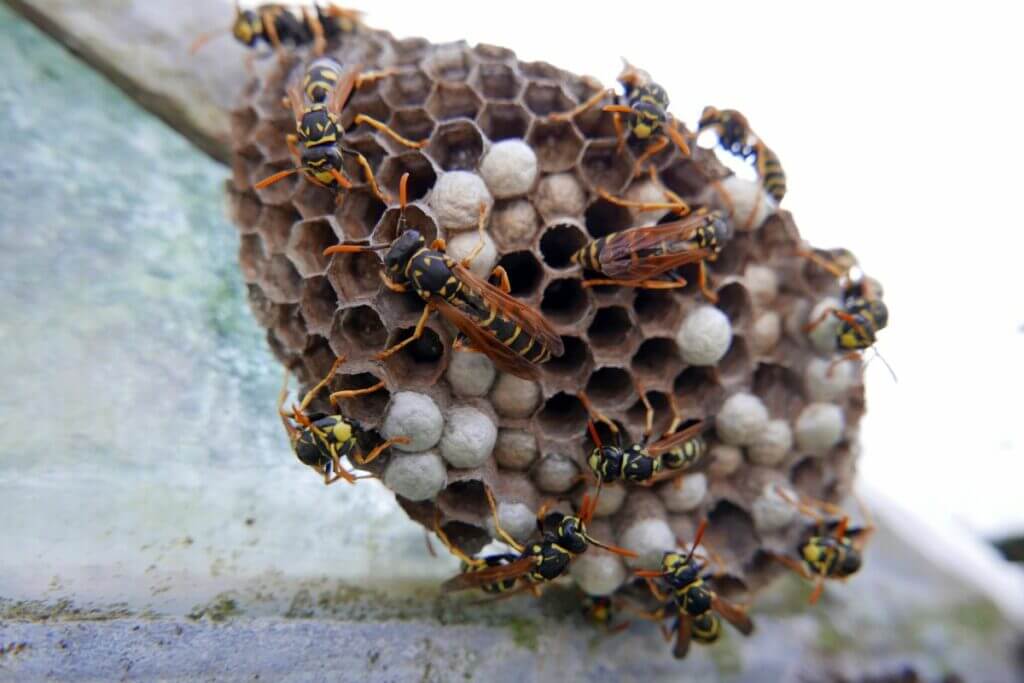
Catching wasp activity early can prevent a larger infestation later. Watch for:
- Wasps flying repeatedly to the same spot
- Small nests forming (golf ball size)
- Increased activity near patios or roof edges
- Buzzing sounds inside walls or ceilings
Recognizing these early signs of wasp activity around your Grand Prairie home can help you act before the colony grows.
Call Brady Pest Control immediately if you notice early nest formation around your home.
Why Summer Makes Wasp Problems Worse
Summer is peak season for wasp activity in Texas due to:
- Rapid colony growth
- Increased food availability
- Ideal nesting conditions
- Longer daylight hours for foraging
Book a pest control service now to prevent multiple pest infestations during the peak summer months.
How to Discourage Wasp Nesting Around Your Home
Seal Gaps and Entry Points
Inspect your home for:
- Cracks in rooflines
- Openings in eaves
- Gaps around siding
Sealing these areas prevents wasps from starting hidden nests.
Remove Food Sources
Reduce attractants by:
- Keeping trash bins tightly sealed
- Cleaning patio surfaces regularly
- Avoiding exposed food or drinks outdoors
Trim Vegetation
Overgrown plants provide natural shelter for wasps. Keep:
- Bushes trimmed
- Tree branches away from the house
- Yard areas are clean and open
Remove Early Nests
In early summer, nests are small and easier to remove. However, caution is important.
- Small nests (golf ball size) can sometimes be removed safely
- Larger nests or aggressive species require professional handling
Call for expert wasp nest removal if the nest is growing or located in a hard-to-reach area.
DIY vs Professional Wasp Control
| Factor | DIY Removal | Professional Service |
| Safety | Risk of stings | Safe handling |
| Effectiveness | Temporary | Long-term solution |
| Nest Removal | Limited | Complete removal |
| Prevention | Minimal | Full prevention plan |
Professional services provide safer and more effective results, especially for large or aggressive colonies.
For reliable service, explore wasp nest control in Grand Prairie to eliminate nests safely and prevent future infestations.
Schedule wasp control service today to remove nests safely and prevent them from returning.
Conclusion
Wasps build nests around eaves, rooflines, fences, and patios in summer because these areas offer protection, stability, and easy access to food. While these structures make your home more comfortable, they also create ideal nesting environments for wasps.
By understanding why wasps choose these locations and taking proactive steps—like sealing gaps, removing food sources, and monitoring early activity—you can significantly reduce your risk of infestation.
Ignoring early signs can quickly lead to larger, more aggressive colonies, making professional treatment the safest and most effective solution.
Seeing wasps around your home? Call Brady Pest Control now for immediate and reliable removal in Grand Prairie, Arlington, Mansfield, and the DFW area.
FAQs
Why do wasps build nests near houses?
They prefer sheltered, stable areas with easy access to food and water.
Are wasps more aggressive in summer?
Yes, colonies grow larger and more protective during the summer months.
Can I remove a wasp nest myself?
Small early nests may be removable, but larger nests should be handled by professionals.
What attracts wasps to patios?
Sugary drinks, food scraps, and nearby insects attract wasps to patios.
How can I stop wasps from returning?
Sealing entry points, removing food sources, and professional treatment are the most effective methods.
When should I call pest control for wasps?
As soon as you notice nest formation or increased activity around your home.