


You wiped the counters, took out the trash, and left no crumbs behind. So why is there a trail of tiny ants marching across your bathroom tile? It feels strange, but it happens to plenty of homeowners across the DFW area. If you’ve been seeing ants indoors after rain or noticed them showing up this spring, your bathroom is one of the first places they head.
Ants suddenly showing up in your bathroom is usually a sign that something in the room is attracting them. In most cases, they are looking for moisture, scented personal care products, and hidden entry points. Even when a bathroom looks clean, it can still give ants what they need. Condensation from showers, small plumbing leaks, toothpaste residue, soap scum, lotion spills, and tiny gaps around pipes can all make the bathroom an easy place for ants to explore.
Dealing with a growing trail already? Contact Brady Pest Control for a fast inspection before the colony settles in.
For Texas homeowners, this problem often becomes more noticeable during warm weather, after rain, or when moisture builds up in bathrooms that are used often. If you are seeing ants near the sink, tub, toilet, or baseboards, the issue is usually not just the ants you can see. It may be a trail leading back to a nest, a hidden leak, or a structural opening that needs attention.
If ants are also appearing in other parts of the home, you may also want to read our guide on why are ants in my house and ants in the house this spring.
Noticing a steady line of ants in your bathroom? Don’t wait for the colony to grow. Contact Brady Pest Control for a professional inspection across Grand Prairie, Arlington, and Mansfield.
Why Ants Pick Your Bathroom
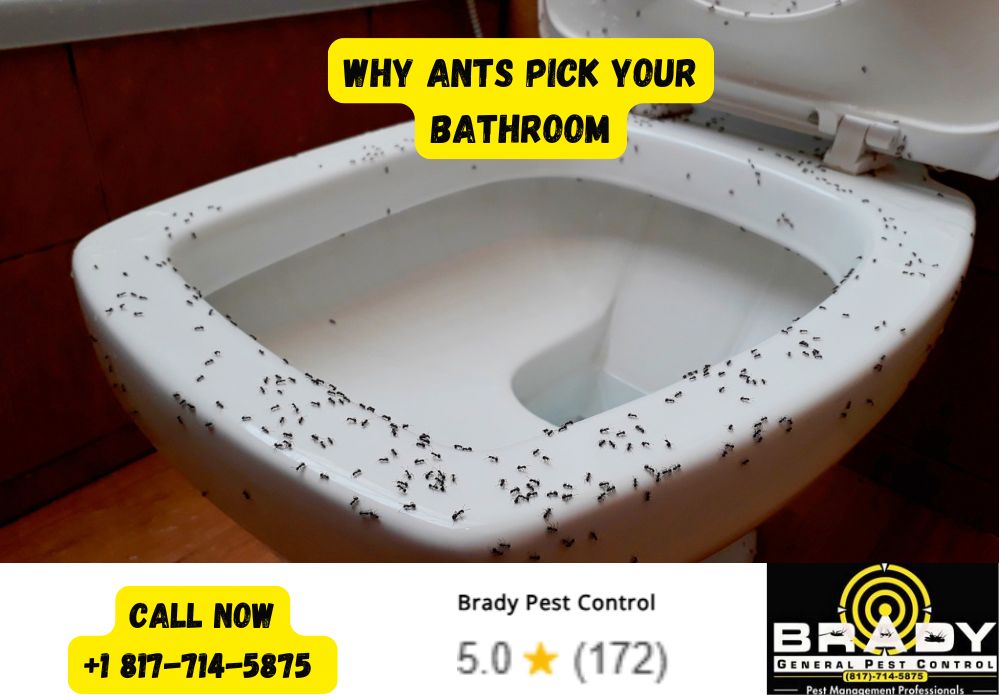
Bathrooms may seem harmless to people, but to ants, they can be a useful indoor stop. They are often searching for three main things: water, food traces, and safe access.
Water needs
Ants need moisture to survive. Bathrooms often provide it in several ways:
- Leaking pipes behind walls or under sinks
- Dripping faucets
- Shower steam and condensation
- Wet towels, bath mats, and damp grout
- Minor toilet seal issues or hidden plumbing leaks
Even a small amount of moisture can be enough to keep ants returning. In many homes, ants do not need standing water; they only need a humid space or a slow leak they can rely on.
Hidden food sources
A bathroom may not have a pantry, but it can still hold enough residue to attract ants. Common sources include:
- Soap scum
- Glycerin in toothpaste
- Lotions and body wash spills
- Shampoo or conditioner drips
- Sweet-smelling personal care products
- Shed hair and skin flakes
Ants are small, and their food needs are small too. A few drops of product on the counter or a sticky ring around the sink can be enough to keep a scout ant interested.
Easy entry points
Ants are skilled at finding ways inside. Bathroom plumbing creates many access points, including:
- Gaps around pipes
- Openings under vanities
- Cracks in baseboards
- Spaces around window frames
- Damaged caulk around tubs and sinks
- Tiny wall gaps near utility lines
Once scout ants find a route, they can leave scent trails for other ants to follow. That is why bathroom ant problems often start with a few ants and then quickly become a steady trail.
If you’re also spotting them elsewhere, our guide on why ants are in your house explains how these trails spread from room to room.
Signs Your Bathroom Ant Problem Is More Than a Nuisance
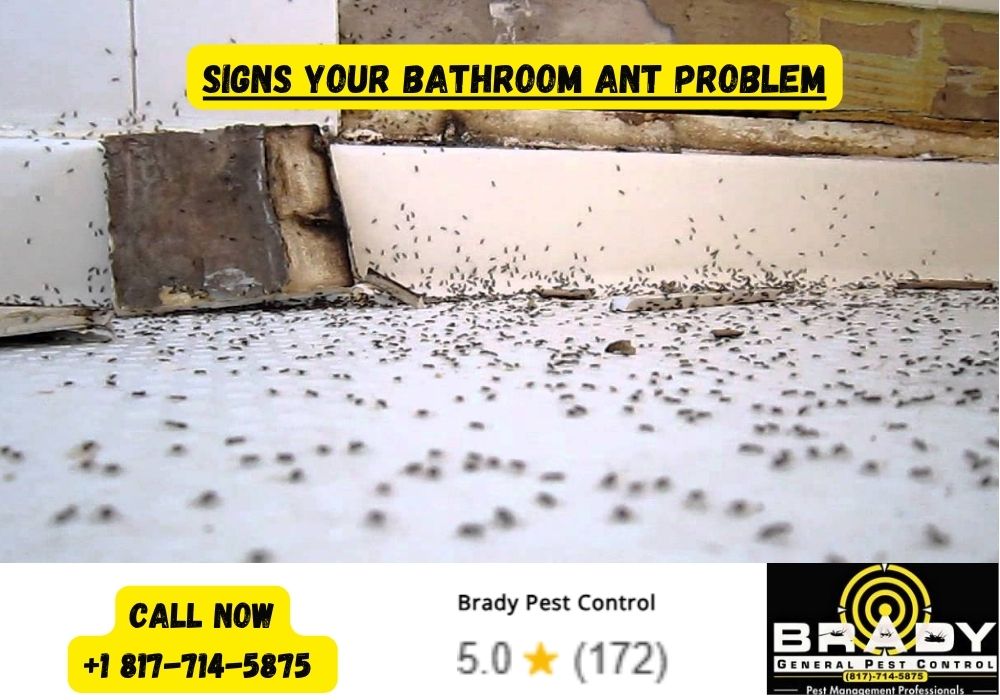
A few ants may seem like a small issue, but repeated activity usually means there is a bigger cause. Watch for these signs:
- Ants returning every day
- Trails moving along the same wall or floor edge
- Ants appearing after showers or when the bathroom is humid
- Activity near plumbing lines or under the sink
- Ants showing up in more than one bathroom
- Large black ants or carpenter ants in the home
If you are seeing larger ants, it is smart to compare them with other wood-destroying pests. Our posts on carpenter ants vs termites in Grand Prairie, TX and signs of carpenter ants in house can help you understand what to look for.
Dealing with a growing trail already? Contact Brady Pest Control for a fast inspection before the colony settles in.
What Kind of Ants Show Up in Bathrooms?

Different ant species behave differently, and the treatment depends on the species. In Texas homes, bathroom infestations may involve:
- Little black ants that follow narrow trails and enter through tiny gaps
- Argentine ants that spread quickly and build large colonies
- Fire ants that may move indoors when outdoor conditions change
- Carpenter ants that are often linked to damp wood and moisture problems
- Pavement ants that commonly enter through foundation or slab cracks
If you are not sure what kind of ants you have, professional identification matters. Some species are mostly nuisance pests, while others can point to hidden moisture damage or structural issues.
For more species-specific help, see little black ants, argentine ants, fire ant control, and ant control Grand Prairie.
How to Get Rid of Ants in the Bathroom
The best approach is to remove the attractants, block the entry route, and treat the colony correctly. Killing visible ants alone usually does not solve the problem for long.
1. Fix leaks and dry the room
This is one of the most important steps.
- Repair dripping pipes
- Check under sinks for wet spots
- Run the exhaust fan for at least 30 minutes after showers
- Wipe down counters, tubs, and sinks
- Replace or dry bath mats and towels quickly
- Watch for condensation around mirrors and windows
Dry bathrooms are much less attractive to ants. If moisture stays in place, ant activity often stays too.
2. Use bait stations instead of relying on sprays
When ants are active, many homeowners reach for a spray first. That may kill the ants you see, but it often does not reach the nest. A better option is slow-acting bait placed along ant trails.
Why bait works:
- Worker ants carry it back to the colony
- The colony may be affected at the source
- It helps reduce repeat activity
- It works better than chasing visible ants one by one
Bait should be placed carefully and away from children and pets. It is often the most effective first step when ants are entering from hidden nesting areas.
3. Seal cracks and gaps
Once moisture and food traces are controlled, close the entry points.
- Apply silicone caulk around baseboards
- Seal pipe holes under sinks
- Repair damaged grout
- Fill small cracks around window frames
- Replace worn caulk around tubs and sinks
This step helps stop scouts from coming back through the same route. In Texas homes, shifting foundations and heat can widen small openings over time, so sealing is an important long-term fix.
4. Clean surfaces every day
Bathrooms should be wiped down regularly, especially if ants are active.
- Clean sink basins and counters
- Remove toothpaste spots
- Wipe lotion and soap residue
- Clean around faucets and drains
- Keep trash bins emptied
- Vacuum hair and debris from corners
A clean bathroom is not just about appearance. It removes the tiny residue that ants can use as a food source.
5. Check nearby rooms too
Bathroom ants often come from a larger indoor pattern. If you are seeing ants elsewhere, check kitchens, laundry rooms, and wall edges near plumbing. Our guide on how to get rid of ants in kitchen in Grand Prairie, TX can help if the problem extends beyond the bathroom.
Following every step and still fighting bathroom ants? Reach out to Brady Pest Control for targeted treatment that reaches the colony at its source.
Why Bathroom Ants Are Common in Texas Homes
Texas weather creates conditions that can push ants indoors. Warm temperatures, rain, and humidity can all increase ant activity. When outdoor nesting areas become too wet or too hot, ants may move inside to search for water and shelter.
Bathroom ant problems are especially common in homes that have:
- Older plumbing
- Foundation movement
- Small caulk failures
- High indoor humidity
- Seasonal moisture changes
This is why many homeowners notice pest issues in spring and summer. If you are preparing for seasonal pest activity, see best time for pest control in Texas spring and why am I seeing ants indoors after rain in Grand Prairie, TX.
Bathroom Ants vs. Other Moisture-Related Pests
Bathrooms can attract more than ants. Moist areas may also bring in termites, roaches, spiders, and even silverfish-like insects. That is why it helps to look at the full picture instead of treating only one pest at a time.
| Pest Type | Common Bathroom Clue | What It May Mean |
| Ants | Trails near sink or tub | Moisture, residue, or entry point |
| Termites | Hidden damage, mud tubes, or soft wood | Possible structural moisture issue |
| Roaches | Activity near drains or cabinets | Food, moisture, and dark hiding spots |
| Spiders | Webs near corners or vents | Other insects nearby |
| Drain flies | Small flies near sink or shower drains | Moist buildup in drains |
If you suspect termites or moisture damage, our pages on termites in bathroom and carpenter ants and termites activity in Texas may be useful.
Practical Ants Prevention Tips for Homeowners
A few simple habits can reduce the chances of bathroom ants returning:
- Keep the bathroom dry
- Repair leaks as soon as you spot them
- Wipe up toothpaste and soap residue
- Seal gaps around plumbing and trim
- Store scented products with lids closed
- Keep the vanity area clean and clutter-free
- Schedule preventive pest control before problems spread
These steps are especially helpful in Texas homes where heat and humidity can make pest activity worse. For more seasonal guidance, you can also review why Texas heat wave brings pests and what pests does summer in Texas bring.
When to Call a Professional Pest Control in DFW Areas

If bathroom ants keep coming back, professional pest control may be the fastest and safest solution. A trained technician can inspect the home, identify the species, locate hidden moisture issues, and recommend the right treatment plan.
You should consider calling a professional if:
- Ants appear daily
- Baits or sprays are not working
- The bathroom has hidden dampness
- You suspect carpenter ants
- Ants are spreading to other rooms
- You want prevention before the issue gets worse
For local service, Brady Pest Control offers targeted solutions for Texas homeowners who need dependable help with recurring ant problems.
Conclusion
Ants suddenly showing up in your bathroom are usually there for a reason. Moisture, scented products, and hidden access points make bathrooms one of the easiest rooms for ants to enter. The most effective solution is to dry the area, remove residue, seal entry points, and use bait to target the colony. If the ants keep returning, there may be a larger problem with plumbing, humidity, or nesting nearby.
For homeowners in Grand Prairie, Arlington, Mansfield, and surrounding DFW areas, Brady Pest Control can help identify the source and provide professional spring pest treatments that support long-term protection. If bathroom ants keep coming back, contact Brady Pest Control for trusted pest control service in your Texas home.
FAQs
Why are ants suddenly showing up in my bathroom?
Ants are usually drawn to moisture, toothpaste residue, soap scum, and tiny cracks around pipes or trim.
Does a clean bathroom still attract ants?
Yes. Even clean bathrooms can provide condensation, small leaks, and trace residue from toiletries.
Will spraying ants in the bathroom get rid of them?
Spraying may kill visible ants, but baiting and sealing entry points usually work better for long-term control.
Can ants in the bathroom mean a plumbing leak?
Yes. A leak under the sink, behind a wall, or near the toilet can attract ants by giving them a steady water source.
What is the best way to keep ants out of the bathroom?
Fix leaks, dry the room, clean residue, seal gaps, and use professional pest control if the problem keeps returning.
Should I worry about carpenter ants in the bathroom?
You should pay attention. Carpenter ants are often linked to moisture and wood damage, so recurring bathroom activity may need a professional inspection.
Do ants in the bathroom get worse after rain?
They can. Rain can push ants indoors or make outdoor nests less stable, causing them to search for shelter inside the home.