
Wasp activity increases significantly during Texas summers, and one of the most common—and dangerous—places they build nests is near entryways. Protecting your family and customers from wasps near doors and high-traffic areas requires proactive steps like sealing structural gaps, eliminating food attractants, and using natural deterrents.
Early summer prevention is especially important, as it stops small colonies from growing into aggressive infestations right where people enter and exit your home or business.
In cities like Grand Prairie, Arlington, and Mansfield, wasps are drawn to warm structures, shaded door frames, and areas with easy access to food. Whether it’s a front porch, garage entry, or commercial doorway, ignoring early signs can quickly turn into a safety risk.
Here’s what you need to know to keep your doorways wasp-free this summer.
Want your home sealed up before wasp season hits its peak? Schedule a Call with Brady Pest Control today.
Why Wasps Like Your Doorway
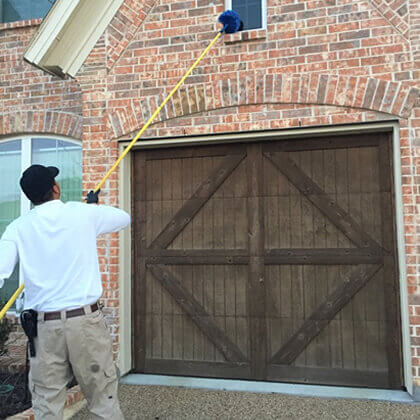
Wasps look for warm, sheltered spots to build their nests. Your front door gives them exactly that. The space around door frames, porch ceilings, eaves, and outdoor light fixtures are some of their favorite nesting spots.
Here are the places to watch near your entrance:
- Door frames and gaps at the bottom of the door
- Porch ceilings and overhangs
- Eaves and soffits above the door
- Light fixtures and mailboxes near the entrance
- Gaps in window frames or siding
Wasps often start small nests in hidden spots before moving closer to your door. Our guide on why wasps build nests around eaves explains how they grow from out-of-sight corners into high-traffic spots.
Already seeing wasps near your front door? Contact Brady Pest Control for a quick, professional check.
Types of Wasps You Might See in Texas
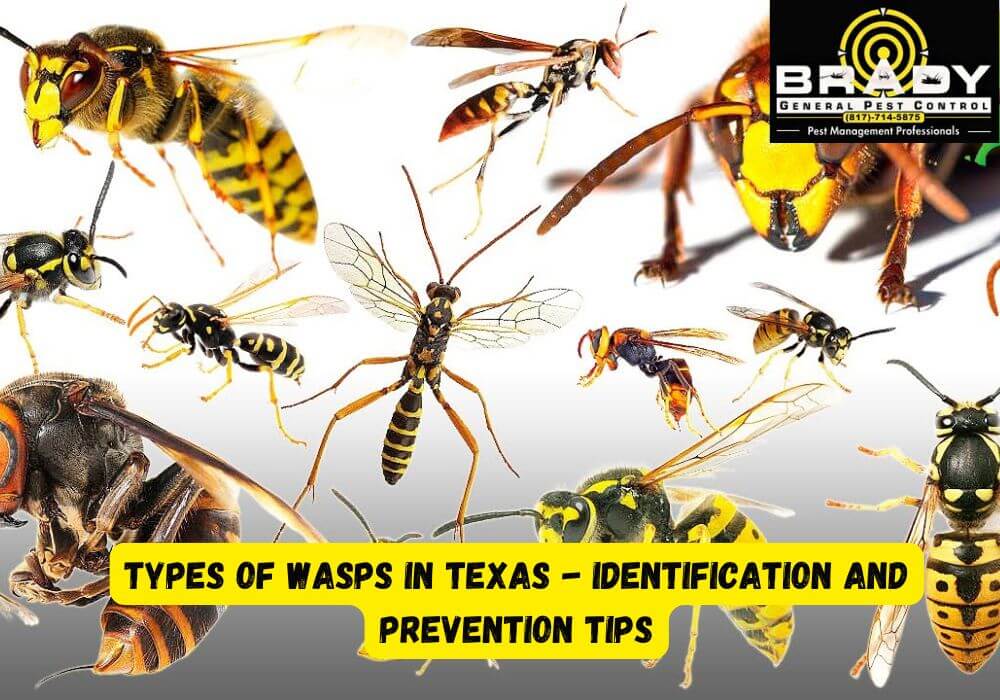
Not all wasps are the same. Knowing which one you’re dealing with helps you understand how serious the problem is. Check out our full guide on the types of wasps in Texas to learn more.
Red Wasps

Red wasps are very common in North Texas. They’re reddish-brown, build open cone-shaped nests, and can get very aggressive if you get too close. You’ll often find them under eaves, on porch ceilings, and around door frames. Learn more about the red wasp in Texas.
Black Wasps

Black wasps are usually less aggressive, but they can still sting. They tend to live alone and are often found near flowers and damp areas around the house. Read our guide on the black wasp in Texas to know what to look for.
Paper Wasps and Hornets
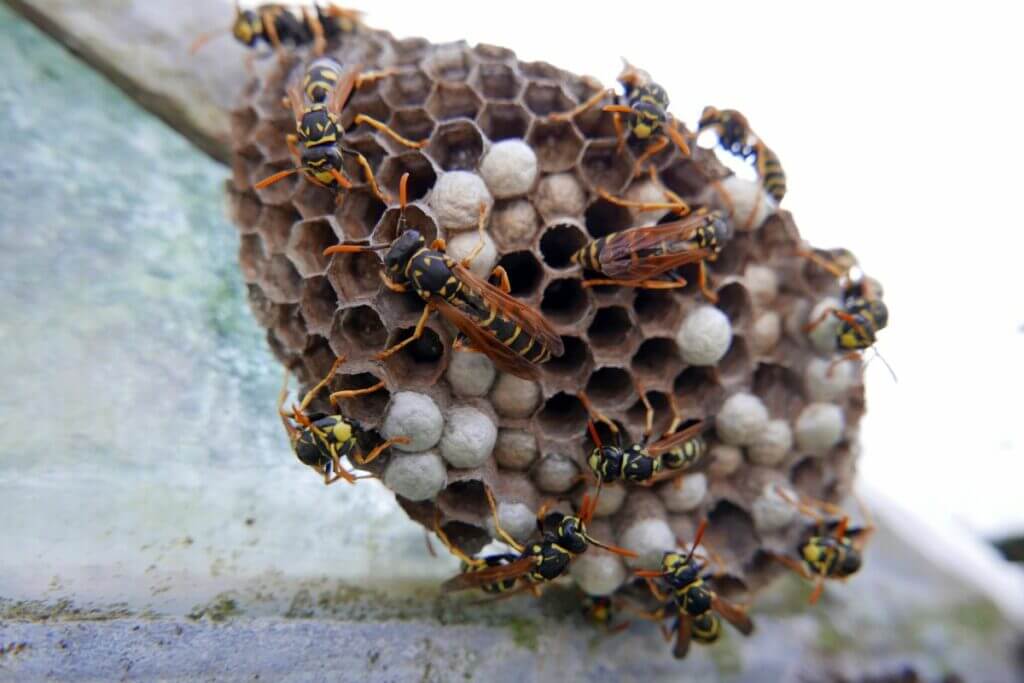
Paper wasps make the classic honeycomb-looking nests you often see hanging from overhangs. Hornets build bigger, rounder nests and are very defensive. If you think you have a hornet nest, our Grand Prairie hornet control service can take care of it safely.
Not sure what kind of wasp is nesting near your door? Call Brady Pest Control and we’ll figure it out for you.
How to Keep Wasps Away: Seal and Trim
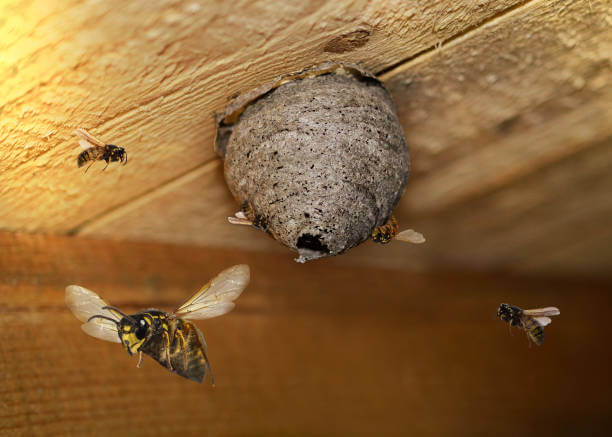
The best thing you can do is make it hard for wasps to build near your door in the first place. Wasps can fit through very small holes, so sealing up your home’s exterior goes a long way.
Fill in Cracks and Gaps
- Use caulk to seal gaps around door frames, windows, and siding where wasps could build a nest or sneak inside.
- Fill any cracks in brick, stucco, or the foundation near the entrance.
- Seal gaps around outdoor lights, pipes, and cables coming through the wall.
Block Open Vents
- Put fine mesh screens over vents, attic openings, and small holes in the walls.
- Fix any torn door or window screens right away.
- Block small openings under eaves and soffits.
Keep Plants Trimmed Back
- Cut bushes and tree branches back from your walls and doorways.
- Keep shrubs near the entrance short so wasps have fewer places to hide.
- Remove climbing vines that can create hidden nesting spots.
When plants grow too close to your home, they give wasps a sheltered spot to start a nest. A little trimming makes a big difference.
Want your home sealed up before wasp season hits its peak? Schedule a visit with Brady Pest Control today.
Keep Food and Smells Away from Your Door
Wasps aren’t just looking for shelter — they’re also looking for food. In early summer, they hunt for protein. Later in the season, they go after sweet things. Removing food sources near your porch keeps them from hanging around.
Keep Trash Covered and Clean Up Spills
- Use outdoor trash cans with tight-fitting lids.
- Wipe up spills quickly, especially on porches and patios.
- Rinse out recycling bins so they don’t smell sweet.
Try Natural Oils to Repel Wasps
A simple spray you can make at home can help keep wasps away.
- Mix water with peppermint oil, clove oil, or lemongrass oil.
- Spray it around your door frame, porch corners, and entry points.
- Spray every few days again and after it rains.
Wasps hate these smells, so spraying regularly helps keep them from setting up near your door.
Don’t Leave Sweet Food or Drinks Outside
- Keep sugary drinks and uncovered food off your porch.
- Cover food when eating outside near the door.
- Move fruit, hummingbird feeders, and sweet drinks away from the entrance.
Quick Prevention Summary
Here’s a simple table to help you remember what to do:
| What to Do | How to Do It | Why It Helps |
| Seal gaps | Use caulk around door frames, windows, and siding | Keeps wasps from nesting in small cracks |
| Block vents | Add mesh screens over openings | Stops wasps from getting inside |
| Trim plants | Cut back bushes and branches near walls | Takes away hiding spots for nests |
| Cover trash | Use bins with tight lids | Removes food that attracts wasps |
| Spray oils | Mix peppermint, clove, or lemongrass with water | Naturally keeps wasps away |
| Avoid sweet food outside | Keep drinks and food covered on the porch | Less food means fewer wasps |
Want a prevention plan made just for your home or business? Contact Brady Pest Control and we’ll help.
When Do Wasps Get Bad in the DFW Area?
Texas summers are hot — and wasps love it. In Grand Prairie, Arlington, and Mansfield, wasp activity usually picks up in late spring and gets worse through the summer. If you catch the problem early, it’s much easier to deal with. See the early signs of wasp activity around your Grand Prairie home so you know what to watch for.
Wasps don’t always start right at your front door. They often begin on rooflines, in garages, or on patios first. Our guide on wasp activity around rooflines, garages, and patios in Mansfield shows how nests spread from those areas to your entryways over time.
When Should You Call a Professional?

Some wasp problems are just too risky to deal with on your own. Call a professional if you see:
- A nest that’s bigger than a golf ball near your door
- Wasps that fly at you when you go near the entrance
- Nests in hard-to-reach places like high eaves or inside vents
- Wasps coming back to the same spot every year
- A nest near a business entrance or anywhere customers walk
Taking down a wasp nest by yourself can be very dangerous, especially with red wasps or hornets, which will attack if they feel threatened. A professional can remove the nest safely and treat the area so wasps don’t come back. Our wasp nest control service in Grand Prairie takes care of the whole job from start to finish.
If you want to know what it might cost, check out our pages on wasp nest removal cost and pest control cost in Grand Prairie. And if you’re not sure how often to have pest control done, our guide on how often pest control should be done gives you a simple plan to follow.
Have a wasp nest right by your door? Don’t try to handle it alone. Contact Brady Pest Control for safe, professional removal.
Conclusion
Wasp nests near entryways are a serious concern during Texas summers. These high-traffic areas increase the risk of stings, making early prevention and professional treatment essential. By sealing gaps, controlling food sources, and using deterrents, you can reduce the chances of infestation. However, once wasps establish a nest, expert removal is the safest solution.
If you’re seeing wasp activity around your home or business entrances, don’t wait for it to escalate. Contact Brady Pest Control today for reliable, professional wasp protection in Grand Prairie, Arlington, Mansfield, and surrounding DFW areas.
FAQs
How do I keep wasps away from my front door?
Seal any gaps around the door frame and siding with caulk, keep your trash cans covered, and spray a mix of water and peppermint, clove, or lemongrass oil near the entry. Also trim back any plants growing close to the door. Starting early in the summer helps the most.
Do natural oils really keep wasps away?
Yes, they can help. Wasps don’t like strong smells like peppermint, clove, or lemongrass. Spraying a water-and-oil mix near your door makes that area less appealing to them. Just reapply every few days and after rain, since the smell fades.
Are red wasps in Texas dangerous?
Yes. Red wasps sting and can be very aggressive if their nest is disturbed. They’re common around homes in North Texas. Because they defend their nests strongly, it’s best to call a professional if you find one near your door.
Why do wasps keep coming back to the same spot?
Wasps like sheltered spots such as eaves, overhangs, and door frames. Once a spot works, new wasps will often return to the same place the following year. Sealing up the area and treating it professionally helps stop this from happening again.
When is wasp season worst in DFW?
Wasp activity starts picking up in late spring and is usually at its worst during the hottest summer months. In Grand Prairie, Arlington, and Mansfield, getting started on prevention in early summer is the smartest move.
Should I remove a wasp nest myself?
A very small, new nest might be manageable on your own. But bigger nests, or nests made by aggressive species like red wasps or hornets, are dangerous to remove without protection and training. If the nest is near a doorway, it’s always safer to call a professional.