

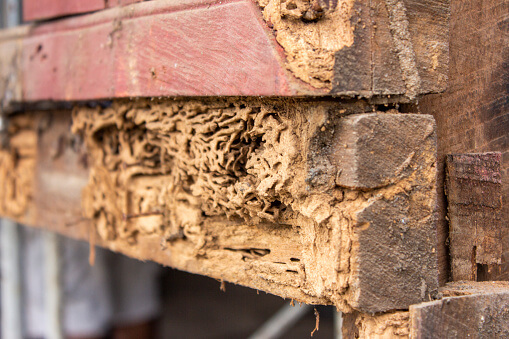
Termites rarely announce themselves. They feed quietly inside your walls for months before you ever notice a problem. By the time the damage shows, repair bills can climb into the thousands. That is why learning the early termite warning signs DFW homes display first is one of the smartest things you can do as a homeowner.
The earliest clues are easy to miss but simple to recognize once you know them. Look for pencil-thick mud tubes running along your foundation, small piles of translucent discarded wings near windowsills, and wood in your baseboards or doorframes that sounds hollow or feels soft. Catching any of these quickly can save you from the cost of devastating structural repairs. For a full picture of what to watch for, start with our complete guide to early warning signs of termites.
We see these signs every season across Grand Prairie, Arlington, and Mansfield. This guide walks you through the five warning signs in detail, shows you a quick test to check if an infestation is active, and explains why North Texas homes are such easy targets. Let’s start with the most reliable sign of all.
Spotting mud tubes or shed wings around your home? Contact Brady Pest Control for a fast termite inspection.
Why DFW Homes Are So Vulnerable to Termites
North Texas gives subterranean termites nearly everything they need. The warm climate keeps colonies active for much of the year, and our heavy clay soils hold moisture against foundations long after the rain stops. That moisture is the fuel termites depend on to survive.
Subterranean termites are the most common type in the region. They nest underground and travel up into homes through soil contact, foundation cracks, and utility openings. According to the Texas A&M AgriLife Extension, mud shelter tubes on crawl space piers, utility openings, and foundation walls are a primary sign of these termites at work.
Homes in Grand Prairie, Arlington, and Mansfield share the same risk profile: slab foundations, clay soil, and long warm seasons. That combination makes early detection essential. Our guide on termite season in Mansfield, TX breaks down the local activity calendar in more detail, and our termite swarm season in Grand Prairie, TX page covers what to expect when colony populations peak.
Warning Sign #1: Mud Tubes on Your Foundation
Mud tubes are the single most reliable indicator of subterranean termite activity. The insects build these pencil-thin tunnels from soil, wood particles, and saliva to stay moist and shielded from predators as they travel between the colony and their food source.
Where to Look for Mud Tubes
Walk the perimeter of your home and inspect these spots closely:
- Exterior and interior concrete foundation walls
- Brickwork and slab edges
- Around utility pipes where they enter the home
- Crawl spaces, basement walls, and slab piers
The tubes look like narrow ribbons of dried dirt about the width of a pencil. If you find one, you almost certainly have a colony nearby. Our termite treatment service covers what happens next once a colony is confirmed.
The Mud Tube Activity Test
Here’s a simple field test we use to check whether a colony is active. Carefully break off a small section of the mud tube and check back in a few days. If the termites rebuild it, the colony is active and feeding. If it stays broken, the tube may be abandoned, but you should still have it inspected.
Breaking the tube does not solve the problem. It only tells you whether termites are still using that path. The colony underground remains untouched.
Found a mud tube and not sure if it’s active? Call us at (817) 714-5875 and we’ll confirm it for you.
Warning Sign #2: Discarded Wings Near Windows and Doors
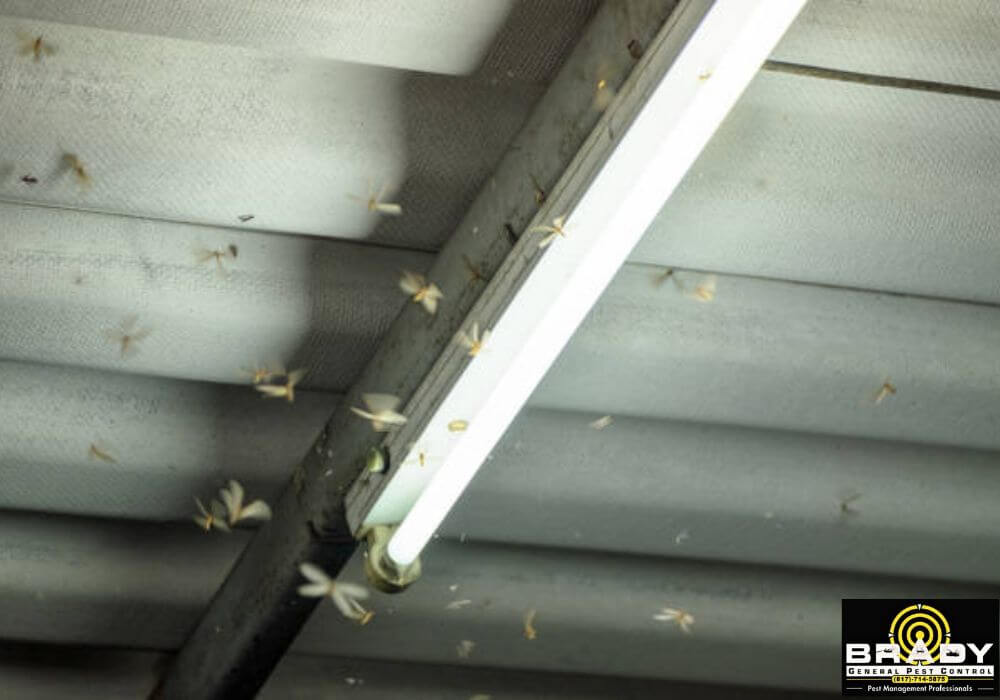
During swarming season, reproductive termites called swarmers (or alates) leave the colony to mate and start new nests. After they land, they shed their wings. Those discarded wings are a strong clue that a mature colony is close.
What to Look For
You’ll typically find small piles of identical, translucent wings in these areas:
- On windowsills and near window tracks
- Around door frames and entry points
- Near interior light fixtures
- Inside garages and along baseboards
The wings are all the same size and shape, which helps separate termites from other insects. Finding them indoors is a red flag that worker termites have likely been active for a while.
Swarms in this region usually peak in spring, often on warm days after rain. Our article on termite swarm season in Grand Prairie, TX explains the timing, and if you’ve seen winged insects after a storm, flying termites after rain covers exactly what that means. For removal guidance, see how to get rid of flying termites.
One quick note: not every winged insect is a termite. Flying ants look similar but have bent antennae and a pinched waist. If you’re unsure, our guides on insects that look like termites and bugs that look like termites show the differences side by side.
Warning Sign #3: Soft, Blistered, or Hollow Wood
Termites eat wood from the inside out. That means the surface can look fine while the interior is being hollowed away. The damage often hides until it’s significant.
How to Spot Damaged Wood
Pay attention to these signs around your home:
- Blistered paint or warped trim that resembles water damage
- Baseboards or window frames that sound hollow when you tap them
- Wood that caves in easily or crumbles under light pressure
- Sagging floors or buckling around door frames
Tap along your baseboards and doorframes with a screwdriver handle. A hollow or papery sound usually means termites have eaten through the interior. If the wood gives way easily, you likely have an active infestation. A professional termite inspection is the right next step the moment wood starts behaving that way.
This is one of the most common signs homeowners notice on their own. Our overview of early warning signs of termites covers what to do the moment you spot it, and our full termite treatment service explains how we address active damage.
Warning Sign #4: Frass (Termite Droppings)
Frass is termite waste, and it’s a telltale sign of drywood termites in particular. These termites push their tiny, wood-colored pellet droppings out of small holes in the wood as they tunnel.
Identifying Frass
Look for small piles that resemble:
- Sawdust near wooden structures
- Coffee grounds or fine grit beneath furniture and trim
- Tiny mounds collecting under small holes in baseboards or beams
Finding frass is a major red flag. It means termites are actively excavating wood inside your home. Because the droppings are often mistaken for ordinary sawdust, many homeowners sweep them up without realizing what they signal. If the piles keep returning, the colony is still at work.
Because bathrooms and kitchens hold moisture, they’re common hotspots. If you’ve noticed activity there, termites in the bathroom explains why these damp rooms attract them. You may also be spotting very small pale insects in the area — our guides on tiny baby termites and what baby termites look like can help you confirm what you’re seeing.
Seeing small piles of what looks like sawdust? Schedule an inspection before the damage spreads.
Warning Sign #5: Stuck Windows and Doors
This sign surprises most homeowners. As termites tunnel and feed, they introduce moisture into the wood. That moisture causes frames to warp and swell, which makes windows and doors harder to open.
If a window or door suddenly becomes tight or sticks for no obvious reason, don’t assume it’s just humidity or house settling. Combined with any other sign on this list, stuck frames can point to hidden termite damage behind the trim. The early warning signs of termites guide walks through how to read multiple signs together and decide when it’s time to call a professional.
Here’s the reader-check: if you’re fighting a door that used to open fine, and you also spot blistered paint or a mud tube nearby, treat it as a termite issue until a professional confirms otherwise.
Early Termite Warning Signs at a Glance
Use this table to match what you’re seeing with the termite type and the action it calls for.
| Warning Sign | What It Looks Like | Likely Termite Type | Your Action Step |
| Mud tubes | Pencil-thin dirt tunnels on foundations | Subterranean | Run the activity test; schedule termite service |
| Discarded wings | Piles of identical translucent wings | Subterranean & drywood | Save a sample; call for inspection |
| Soft/hollow wood | Blistered paint, hollow tapping sound | Both types | Tap-test trim; book a termite inspection |
| Frass | Sawdust or coffee-ground piles | Drywood | Don’t sweep it away; report to a pro |
| Stuck windows/doors | Frames suddenly tight to open | Subterranean | Inspect surrounding wood; review early warning signs |
Heat and moisture tie all of these together. The longer the signs go unaddressed, the more the colony grows.
What to Do When You Spot the Signs
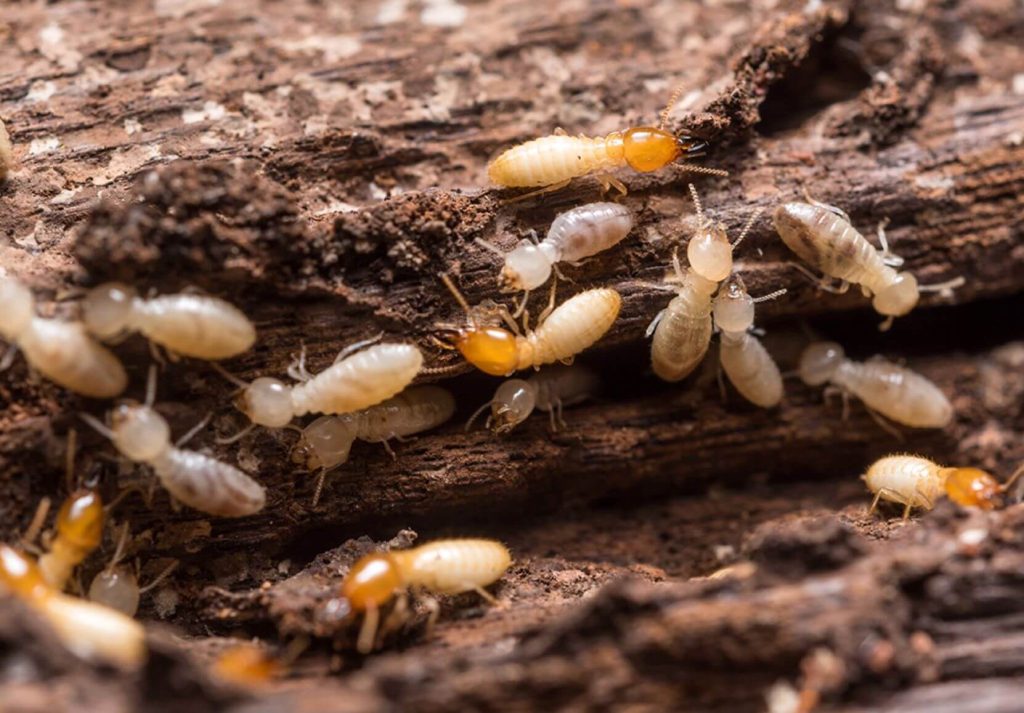
A single sign is enough reason to act. Termites breed fast and hide well, so DIY sprays rarely reach the colony at the source.
Here’s the process we follow:
- Inspect the full property to locate entry points, mud tubes, and nesting sites
- Identify the termite type, since subterranean and drywood treatments differ
- Treat with targeted methods such as liquid barriers or bait systems
- Follow up to confirm the colony is gone and seal future access
Tiny pale insects near damaged wood are often young termites. If you’re trying to identify them, what baby termites look like and tiny baby termites walk through identification step by step. Not sure you’re even looking at termites? Check our guide on bugs that look like termites first. Wondering about the investment? Our breakdown of termite treatment cost in Grand Prairie, TX helps you plan before you decide.
For more precise visual identification, the Texas A&M AgriLife Extension publishes detailed photos and localized guidance on subterranean termites and their shelter tubes.
Worried about what you’ve found? Contact Brady Pest Control and we’ll assess your home quickly.
Protect Your Home Before the Damage Is Done
Termites work silently, but the warning signs are there if you know where to look. Mud tubes on the foundation, discarded wings near windows, hollow or soft wood, frass that looks like sawdust, and sticking doors all point to the same conclusion: it’s time for an inspection. Catching these early termite warning signs quickly is the difference between a simple treatment and a costly structural repair.
Don’t wait for the damage to surface. Take action the moment you spot a sign.
Noticing mud tubes, shed wings, or soft wood around your home or business? Contact Brady Pest Control at (817) 714-5875 or through our contact page for reliable termite inspection and treatment in Grand Prairie, Arlington, Mansfield, and across the DFW area.
Frequently Asked Questions
What are the earliest termite warning signs in DFW homes?
The earliest signs include pencil-thick mud tubes along the foundation, piles of translucent discarded wings near windows and doors, hollow-sounding or soft wood, frass that looks like sawdust, and windows or doors that suddenly stick. Our early warning signs of termites guide covers each one with photos and next steps.
How do I know if a mud tube is active?
Break off a small section of the tube and check back in a few days. If the termites rebuild it, the colony is active and feeding. If it stays broken, it may be abandoned, but a professional inspection is still wise.
Why are termites so common in Grand Prairie, Arlington, and Mansfield?
North Texas has a warm climate and heavy clay soils that hold moisture against foundations. Those conditions are ideal for subterranean termites, the most common and destructive type in the region. See our termite season in Mansfield, TX page for local timing.
Are discarded wings a sign of an active infestation?
Yes. Swarmers shed their wings after leaving the colony to mate. Finding piles of identical wings indoors usually means a mature colony is nearby and worker termites have likely been active for some time. Our termite swarm season in Grand Prairie article explains when this happens most.
What does termite frass look like?
Frass is wood-colored pellet droppings that resemble sawdust or coffee grounds. Drywood termites push it out of small holes in the wood, so you’ll often find small piles beneath baseboards, beams, or furniture. Learn more in our guide on tiny baby termites.
Can I treat termites myself, or should I call a professional?
Store-bought sprays rarely reach the colony underground or inside walls. Because termites breed quickly and hide well, professional termite treatment is the reliable way to eliminate them and prevent their return.
How quickly should I act after spotting a warning sign?
Right away. Termite damage worsens the longer a colony feeds, and even a few months can cause meaningful structural harm. Early action keeps repair costs and damage to a minimum. Review termite treatment costs in Grand Prairie to understand what early vs. late treatment typically means financially.