


Summer is prime time for uninvited furry guests, and they’re better at breaking in than most people realize. Rats and mice enter homes during summer to escape extreme heat, search for water, and find reliable food sources. Even more concerning, they can squeeze through tiny openings, including gaps around utility lines, damaged roof vents, and spaces under doors.
Here’s what surprises most Texas homeowners: a mouse only needs an opening the size of a dime, and a rat needs one no bigger than a quarter. If a pencil fits, so does a mouse. That’s how a small crack near your foundation turns into a full attic problem by August.
Hearing scratching in your walls or noticing droppings? Schedule a professional rodent inspection before a small issue becomes a major infestation.
This guide walks you through why rodents push indoors when the heat spikes, the exact spots they sneak through, and the practical steps that keep them out. Let’s get into it.
Why Rodents Invade Homes During Summer?

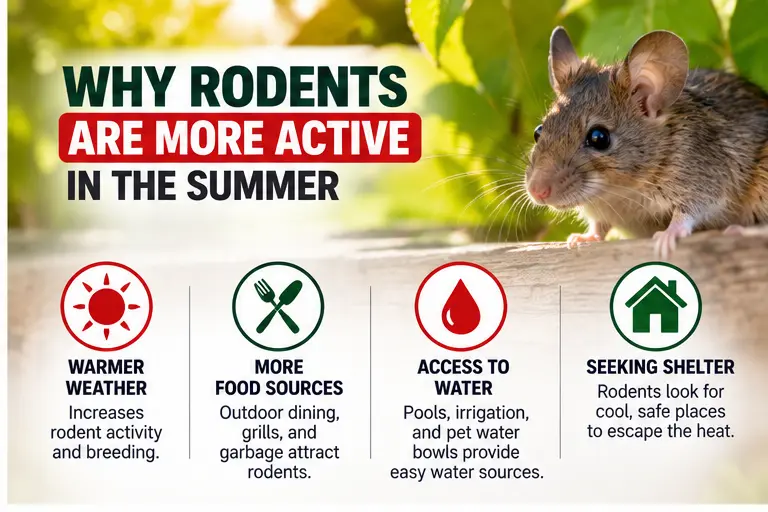
Rodents aren’t trying to ruin your summer. They’re just following three basic needs, and your home checks every box. When outdoor conditions turn harsh, your walls and attic start to look like a five-star resort to a rat.
How Extreme Heat Pushes Rats and Mice Indoors
Texas summers get brutal. When the pavement hits triple digits, rodents can’t cool down outside the way they need to. So they hunt for shelter that stays stable and cool.
Your home offers exactly that:
- Attics and crawl spaces that hold steady temperatures
- Wall voids that block the worst of the heat
- Shaded foundation gaps near the cool ground
The same heat that drives you inside to the AC drives rodents there too. And once they find a comfortable spot, they settle in and start breeding. Our overview of rodents in the summer explains just how fast that population can grow.
Hearing scratching in the walls or attic already? Contact Brady Pest Control for a fast summer rodent inspection.
How Summer Water Scarcity Turns Your Home Into a Target?
Dry summer weather dries up the puddles, ponds, and moist ground rodents rely on. Suddenly, water becomes hard to find outdoors. So they follow the moisture indoors.
The wettest spots in and around your home become magnets:
- Leaky pipes under sinks and in walls
- AC condensation lines dripping near the unit
- Pet water bowls left out on the porch or in the garage
- Standing water in trays, buckets, or clogged gutters
A single dripping faucet can be all the invitation a thirsty rat needs.
How Summer Food Access Draws Rodents to Your Walls
Food seals the deal. Once rodents smell an easy meal near your home, they linger, explore, and eventually find a way in. Summer habits make this worse.
Watch out for these common draws:
- Overflowing trash bins with loose or missing lids
- Fallen fruit from garden trees left on the ground
- Barbecue leftovers and crumbs around the patio
- Open pet food bags in the garage
These attractants pull rodents right up against your exterior walls, and from there it’s a short trip to the first gap they find. Rodents rarely travel alone in these conditions, so where there’s food, there’s usually a crowd. Learn more about what pests summer in Texas brings and why a Texas heat wave brings pests to the doorstep.
Quick recap: heat pushes rodents to seek cool shelter, dry weather drives them toward your water sources, and easy food keeps them coming back.
Summer Entry Points Rodents Use in Texas Homes
Now for the part that really matters. You can’t keep rodents out until you know where they’re getting in. These pests are experts at finding the weak spots most homeowners never think about.
Foundation Cracks: The Dime and Quarter Rule
Your foundation is the first line of defense, and even small flaws create big problems. Rodents flatten their bodies to slip through gaps that look far too small.
- Mice fit through openings as small as a dime (about a quarter-inch)
- Rats squeeze through gaps the size of a quarter (about a half-inch)
Cracks in concrete, gaps in siding, and separations where the foundation meets the wall all become open doors. If you’re not sure which pest you’re dealing with, our guide on rat vs. mouse helps you tell them apart by size and signs.
Utility Penetrations: Gaps Around Pipes, HVAC, and Wiring
Every pipe and wire that enters your home creates a hole in the wall. Builders don’t always seal these tightly, and over time they widen or crack.
Common trouble spots include:
- Plumbing pipes under sinks and where lines enter walls
- Electrical conduits running into the house
- HVAC lines and the openings around the AC unit
These gaps are hidden, dark, and often near warmth or moisture, everything a rodent wants. They’re also one of the most overlooked entry points during a DIY seal-up.
Not sure where the gaps are hiding? Contact Brady Pest Control for a thorough entry-point inspection around your home.
Doors and Windows: Weatherstripping, Garage Gaps, and Torn Screens
Doors and windows take a beating over the years, and worn parts leave openings at ground level where rodents patrol.
Check these spots closely:
- Worn weatherstripping at the base of exterior doors
- Gaps under the garage door where the seal has cracked
- Torn window screens on lower floors and basements
The garage door is a big one. That rubber seal wears down fast in the Texas sun, and even a small gap at the corner gives mice an easy way in. Once inside the garage, they’re one wall away from the rest of the house.
Roof and Eaves: Overhanging Branches, Damaged Vents, and Soffits
Rodents are excellent climbers, so don’t assume the danger stops at ground level. Rats especially love a high entrance.
Watch for:
- Overhanging tree branches that act as highways to your roof
- Damaged roof vents with torn screening
- Gaps in soffits and fascia along the eaves
- Missing or lifted shingles that expose the attic
A branch touching your roofline is basically a bridge. Rats scamper across, find a weak vent, and drop straight into your attic. That’s why so many summer infestations start up top.
Here’s a quick comparison to help you size up the threat.
| Factor | Mice | Rats |
| Entry gap needed | Dime-sized (¼ inch) | Quarter-sized (½ inch) |
| Favorite entry level | Ground gaps, foundation | Roof, eaves, high vents |
| Common signs | Small dark droppings, gnaw marks, faint scratching | Larger droppings, grease marks, loud scratching |
| Nesting spots | Wall voids, drawers, insulation | Attics, crawl spaces, under decks |
| Main risks | Contamination, chewed wires | Structural damage, disease, chewed wires |
Knowing which pest you have shapes your whole plan. For a rat problem, our guides on pest control for rats and how to get rid of rats in the house fast point you in the right direction, while our pest control for mice resource covers the smaller invaders.
Rodent Prevention and Sealing Tips for Texas Summers

Good news: you have real control here. Blocking rodents comes down to sealing the gaps, removing the attractants, and cutting off their access routes. Here’s how to do it right.
Seal Openings With Steel Wool and Caulk
Rodents chew through soft materials like foam and rubber, so you need something tougher.
- Pack holes tightly with steel wool, which rodents can’t gnaw through
- Seal over it with caulk to hold it in place
- Use metal flashing for larger gaps around pipes and vents
Work your way around the whole house, checking the foundation, utility lines, and eaves. Skip a single gap and rodents will find it. For long-term peace of mind, our Fort Worth rodent control service covers professional exclusion that catches what DIY misses.
Trim Vegetation 3 to 5 Feet From Your House
Overgrown plants give rodents cover and a path to your walls and roof. Clearing that buffer makes your home far less welcoming.
- Cut back bushes and shrubs at least 3 to 5 feet from the walls
- Trim tree limbs away from the roofline and eaves
- Clear woodpiles and debris stacked against the house
This one step removes both the highway to your roof and the hiding spots near your foundation. For more habits that keep rodents at bay, see our tips on what keeps mice away.
Want your home sealed before the summer rodent rush? Book a prevention visit with Brady Pest Control today.
Store Food and Lock Down Trash
Take away the food, and rodents lose their reason to stick around.
- Store pantry food and pet food in rigid, airtight containers
- Keep outdoor trash cans locked with tight lids
- Clean up fallen fruit and barbecue mess quickly
Plastic bags and cardboard boxes don’t stand a chance against rodent teeth. Rigid containers are the way to go.
Fix Leaks and Eliminate Standing Water
Cut off the water supply and your home drops way down on a rodent’s list.
- Repair dripping outdoor faucets and pipes
- Clear AC condensation lines so they drain properly
- Dump out standing water in trays, buckets, and clogged gutters
Since summer water scarcity is a major driver, this step packs a bigger punch than most people expect.
Quick recap: seal gaps with steel wool and caulk, trim plants back 3 to 5 feet, lock up food and trash, and shut off water sources.
Why Summer Timing Makes Rodent Prevention Urgent
Rodents breed fast, and summer gives them the perfect conditions to multiply. What starts as one or two mice in June can turn into a full colony by late summer. That’s why acting early beats waiting for the problem to grow.
Getting ahead of the season pays off. Our guide on the best time for pest control in Texas explains why early treatment stops infestations before they take hold against you.
Conclusion
Rodents entering homes during summer is a common problem across Texas, driven by extreme heat, lack of water, and easy access to food. By sealing entry points, eliminating attractants, and maintaining your property, you can significantly reduce the risk.
However, once rodents find a way inside, professional intervention is the most effective solution to stop the infestation and prevent it from returning.
Noticing signs of rodents in your home this summer? Reach out to Brady Pest Control for fast, reliable rodent control services in Grand Prairie, Arlington, Mansfield, and throughout the DFW area.
FAQs
How small a gap can a rodent squeeze through?
Smaller than you’d think. A mouse fits through a dime-sized opening, about a quarter-inch, and a rat squeezes through a quarter-sized gap, about a half-inch. If a pencil can slide into a crack, a mouse can follow it. That’s why sealing even tiny gaps matters.
Why do rodents come inside more during the summer?
Three reasons: heat, water, and food. Extreme summer temperatures push rodents to find cool, stable shelter indoors. Dry weather dries up their outdoor water, so they chase leaks and condensation inside. Easy food from trash and gardens keeps them coming back.
What are the most common summer entry points for rodents?
Foundation cracks, gaps around utility lines like plumbing and HVAC, worn door weatherstripping, garage door gaps, torn screens, and roof weak spots like damaged vents and soffits. Overhanging tree branches also act as highways straight to your roof.
Does steel wool really keep rodents out?
Yes. Rodents can chew through foam, rubber, and plastic, but steel wool is too tough for their teeth. Pack it tightly into gaps and seal over it with caulk to hold it in place. For bigger openings, add metal flashing for extra protection.
How far should I trim plants away from my house?
Keep bushes, shrubs, and tree limbs cut back at least 3 to 5 feet from your walls and roofline. This removes the cover rodents use to hide and cuts off the branches they climb to reach your roof and attic.
Are rats and mice dangerous to have in the house?
Yes. Both chew through wires, which creates fire risks, and they contaminate food and surfaces. Rats can cause structural damage and carry disease. Because they breed quickly in summer, a small problem can grow serious fast if left alone.