
Having insects in your Texas home may leave you wondering if you’re dealing with ants or termites. But, while they may seem alike at first glance, especially winged swarms, ants and termites differ drastically from each other in terms of behavior, destruction, and treatments.
This article is going to explore ants vs termites and tell you all about their differences.
Not sure what kind of insects you found in your Texas home – ants or termites? Please call Brady Pest Control.
Ants vs Termites: The Fastest Way to Tell Them Apart
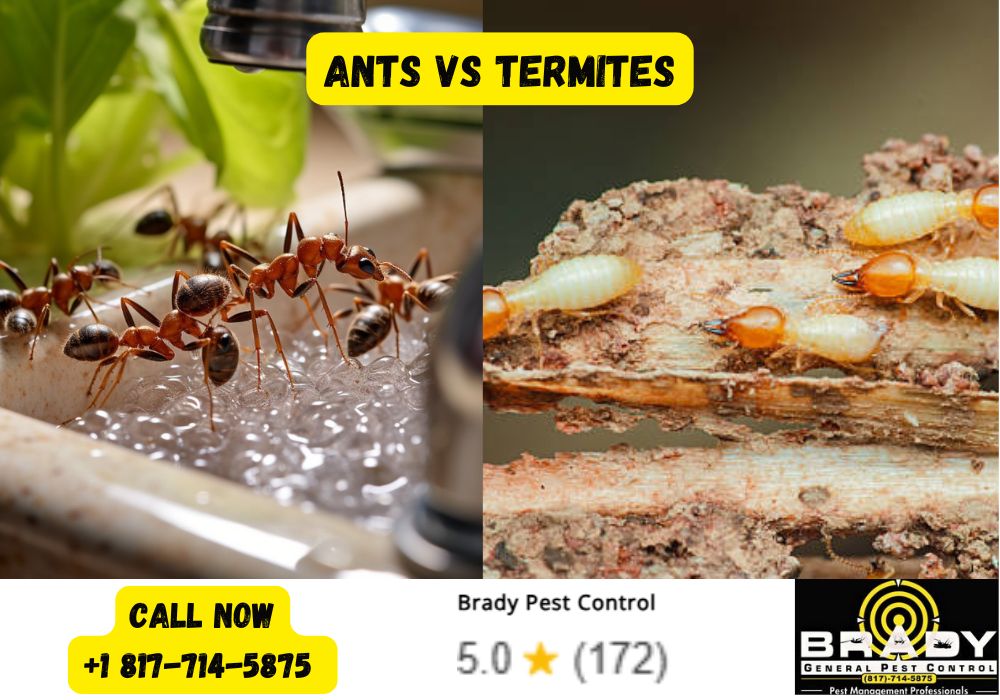
The fastest method of differentiating between ants and termites would be the examination of their waists, antennae, and wings.
While termites have a broad and straight body, as well as straight antennae, all four of their wings are relatively equal in size. The waist of ants is thin and narrow, and their antennae are bent, while the front wings are larger compared to the rear wings.
This information is especially important in case of swarming. As per Texas A&M AgriLife Extension, winged carpenter ants may at times be confused with winged termites. Read our latest post on Why Termites Swarm After Rain in Texas
Make sure that you protect your house with a professional inspection.
Termites vs Ants: Physical Differences
In the comparison of termites vs ants, it should be noted that color should not be the only criterion to distinguish between these insects because it differs depending on the species and its age.
| Feature | Termites | Ants |
| Waist | Broad and straight | Narrow and pinched |
| Antennae | Straight | Bent or elbowed |
| Wings | Similar length | Front wings longer |
| Body | More uniform | More defined sections |
| Food | Cellulose and wood materials | Food, insects, sugars, and other sources |
| Nesting | Soil, wood, or hidden areas | Soil, walls, wood, and other locations |
Where They Live in Texas
Termites typically like to remain concealed within the soil, wood, cavity within walls, and many other hiding places. The subterranean termite uses soil and moisture to get access to the wooden parts of a building. Mud tubes found around the foundation and walls are very important signs of termite presence.
The carpenter ant digs through wood and creates galleries for nesting purposes but does not consume wood. This fact can indicate problems with moisture, decayed wood, and many others.
Signs You May Have Termites
Look out for:
- Mud tunnels on foundation and wall
- Hollow or damaged wood
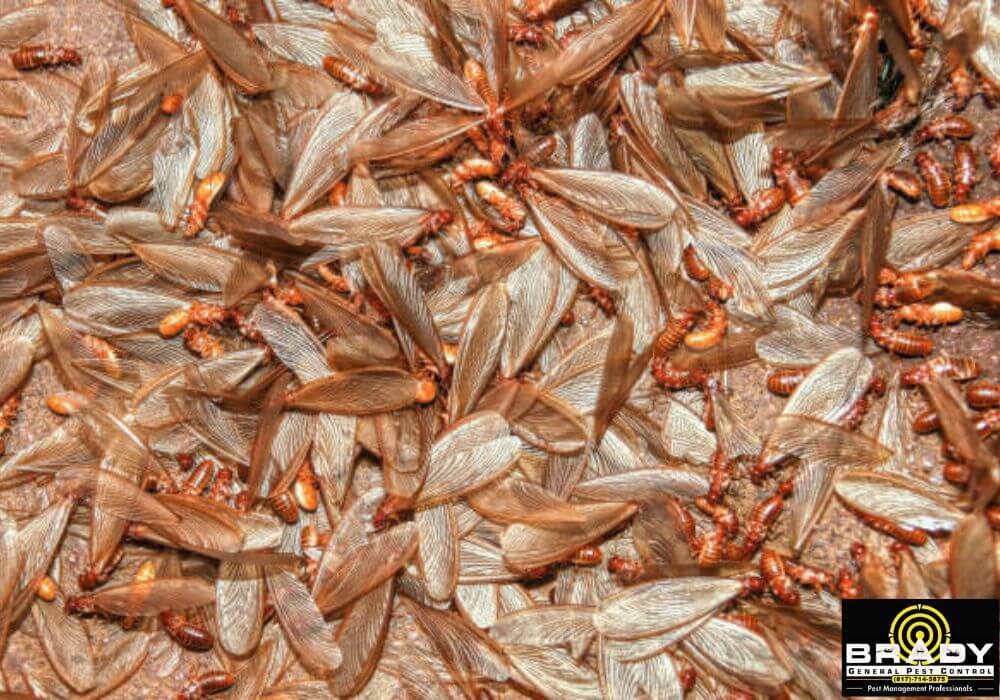
- Presence of wings near a window or light
- Swarming insects inside the building
- Unknown wood damage
- Moisture issues on the foundation
The Environmental Protection Agency advises that, when distinguishing between ants and termites, look for hollow spaces in the wood and termite swarms.
For ants vs. termites, the presence of discarded wings may come in handy. Wings of termites are equal in length, whereas those of ants are not.
Signs of Ant Activity
Ants utilize vision to find their way and can be found close to where there is food as well as near windows, foundation, wall gaps, trees, and decaying wood. Carpenter ants make channels through wood that is decaying, although they do not eat the wood.
This activity, winged ants, or ants emerging from walls should be observed more closely.
Ants vs Termites: What Damage Do They Cause?
There is one big distinction between ants and termites when it comes to their relationship with wood.
Termites eat cellulose-based products and can destroy wood that forms structures. In a comparison of termites and ants, eating cellulose is one thing that distinguishes termites from ants. Since the nests may be kept hidden for quite some time, the destruction will happen before the presence of insects is detected. The carpenter ants of Texas nest in wood without feeding on it.
What To Do If You Find Them
When it comes to determining whether you are faced with termites vs ants, never depend on one sign. Take a good picture and look around for signs such as mud tubes, wood damage, wet spots, ant trails, or discarded wings.
Professional inspection is recommended for termite problems because visible pests could be just a fraction of a bigger colony. The treatments are also often required to be done with specialized products, tools, and techniques.
It is vital to identify termites vs ants before treatment. It is a crucial step in the process of termite vs ant elimination. Proper identification of termites vs ants will also ensure that the right treatment is used.
Need help with the identification? Get in touch with Brady Pest Control for pest inspection in Grand Prairie and the Dallas–Fort Worth region.
How to Prevent Ants and Termites in Texas
Some simple maintenance can prevent conditions favorable for these pests:
- Take care of any leaks in the plumbing and roof without delay.
- Make sure the foundation area is as dry as possible.
- Remove any wood materials near the structure.
- Firewood should be stored away from the structure.
- The plantings should not touch any exposed wood.
- Seal any gaps or openings near windows and doors as well as near electrical or utility lines.
- Always keep your food covered to prevent access by ants.
- Inspections can be carried out regularly where there is suspicion of activity.
Control of moisture, good drainage, and reduced wood-soil contact are essential elements of termite prevention.
All of these tips help you deal with ants versus termites and are necessary for preventing conditions favorable for termites versus ants. It is important to remember that prevention is not enough for dealing with an existing termite infestation.
Are you seeing wings, mud tubes, or mysterious wood damage? Get a free inspection before things get worse.
Protect Your Texas Home From the Wrong Pest Treatment
Knowing how ants differ from termites is the way to save time if you observe any bugs at your place. Pay attention to the bug’s body, antennae, wings, where the bug nests, and what kind of damage it makes.
The main takeaway from the article about termites vs ants is obvious – look at the bugs’ differences and do not waste time, because it will be required for other actions if you have to deal with pests.
FAQs
What is the worst enemy of termites?
Termites have natural enemies such as ants, spiders, and some other insects. In case of a household infestation, identification and treatment of the colony are better than natural enemies.
Should you kill ants in your house?
This will not get rid of the colony. Regular appearance of these insects requires identifying entry points or places of their nest.
Are ants able to get rid of termites?
In spite of the fact that ants can be regarded as termite predators, they cannot be treated as a way of getting rid of termites. It is necessary to find the colony in the building and destroy it properly.
Can ants be mistaken for termites?
Sure, because both species of insects may have wings; therefore, they appear extremely alike. Ants have bent antennas, narrow waists, and asymmetrical wings, while termites have straight antennas, broad waists, and symmetrical wings.
What are the first indications of termites?
The first indications of their presence include mud tubes, shed wings, hollow wood sound, swarms, and unexplained destruction of wood. Very often, termite infestation is not detected at all.
How will you kill the termites?
There is a chemical that can kill termites when it comes into contact with them; however, elimination of visible termites does not mean the elimination of the whole colony. The elimination of the infestation and not of pests is required.
What smells do termites hate?
There is no particular scent that could be used as complete termite protection. You cannot rely on scents or essential oils in case of infestation of a structure.
What is the worst enemy of termites?
In case of a household infestation, it is better to treat the infestation properly instead of relying on natural enemies. Decreasing of moisture and contact with soil are also helpful.