
Insects That Look Like Termites: How to Identify Them in Grand Prairie, TX

If you are concerned with insects similar to termites in Grand Prairie, TX, it is useful to understand the differences. Pests are unwanted creatures that can destroy the whole outlook of your house. Brady Pest Control in Grand Prairie, TX. will assist you to control and eradicate these pests.

Common Insects that look like Termites?

Here are the most common types of Insects that look like termites:
1. Carpenter Ants
2. Powderpost Beetles
3. Flying Ants

  1. Carpenter Ants
  • Appearance: Bigger than termites, black or dark brown, slender and abdominal, and curved antennae.
  • Wings: Reproductive ants have two pairs of wings. The anterior wings are larger than the others.
  • Behavior: They are known to breed in woodwork but do not feed on it, leaving behind dusty substances that resemble sawdust or frass.
  • Signs: Frass found in locations close to wooden structures.
  1. Powderpost Beetles
  • Appearance: Cylindrical, small, reddish brown to black, and size ranging from 1/8 to 3/4 inches.
  • Wings: Hard wing covers with differentiated slots.
  • Behavior: Sawdust-like material exiting holes with a fine, powdery texture.
  • Signs: Tiny holes on the surface of the wooden material and a pack of sawdust.
  1. Flying Ants
  • Appearance: It has a constricted waist and elbowed antennae like the carpenter ants.
  • Wings: Two pairs of wings and the first pair is larger than the second.
  • Behavior: Swarm mostly in spring and summer with relatively low impact on wood.
  • Signs: Winged ants around windows or near sources of light.

Get inspection for your home/office by Brady Pest Control now!

Identifying Termites

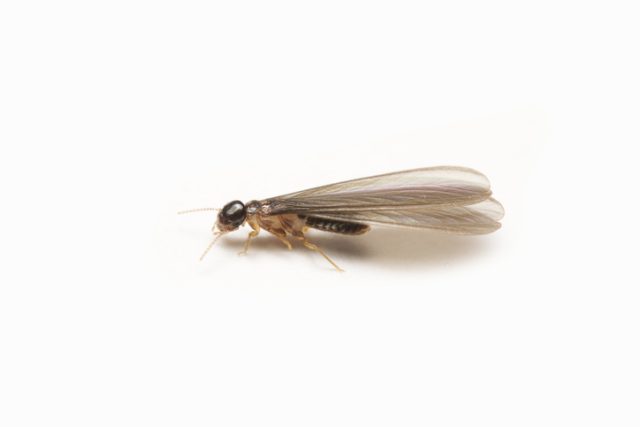
  • Appearance: Straight antennae, broad waist, and lighter-colored workers. Reproductive termites are winged and dark brown to black.
  • Wings: Swarmers have equal size and shape of two pairs of wings.
  • Behavior: Termites feed on soft and hard timber products, which results in weakened structures.
  • Signs: Formation on the walls, hollow wooden knocks, discarded wings, and frass.

Get peace of mind. Contact Brady Pest Control today or fill out our form!

Tips for Identification

  • Examine Antennae: 

The antennae in termites are straight. The antennae in ants are bent.

  • Check Waist: 

Termites have a regular body width with no clear division at the midline, while ants have a slim waist.

  • Look at Wings: 

The wings of a termite are of the same size. The wings of an ant are not of equal length.

  • Inspect Wood: 

Find wood damage or mud tubes for termites.

Get Professional Help!

If you think you have some insects resembling termites in your homes, Brady Pest Control in Grand Prairie, TX, can help. To ensure your home is safe, we offer comprehensive assessments and quality treatments.
Final Words!
There are indeed many insects that resemble termites. If you discover these in Grand Prairie, TX then you need the services of Brady Pest Control. They offer professional identification and management professional services for the safety of your home. You can contact us at 817-714-5875 for assistance or fill out the form.
Bugs that Look like Termites? How to Identify Them in Grand Prairie, TX

Identifying the pests might be challenging in Grand Prairie, TX, especially bugs that resemble termites. At Brady Pest Control, we are capable of helping you differentiate these pests and avoid their invasion of your home. Below is a list of similar insects often confused with termites and how to differentiate them. in this article we will discuss in detail Bugs that Look like Termites. 

Continue reading “Bugs that Look like Termites? How to Identify Them in Grand Prairie, TX”

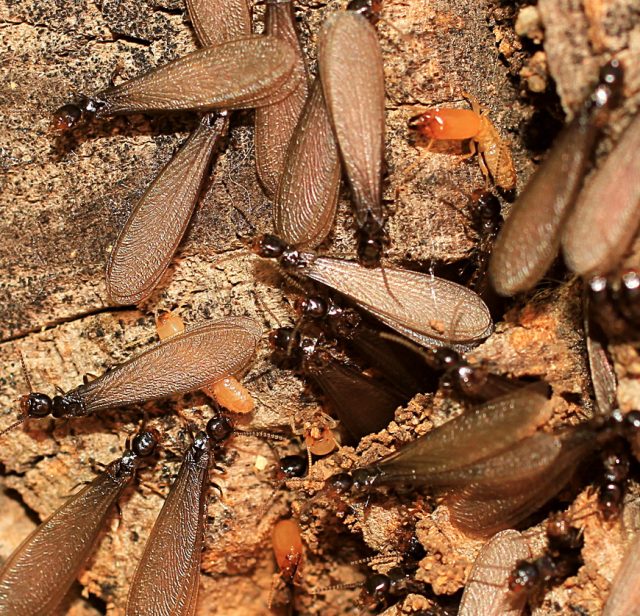
Flying Termite Alates dispersing during the colony's reproductive phase.

Flying Termites After Rain: Should You Be Worried? 2024 Detailed Guide

When it rains, you might see flying termites near your house. Brady Pest Control in Grand Prairie, Texas, knows this concern. Flying termites after rain are a sign of termite activity and potential infestations.

Wet weather brings about an increase in flying termites. Termites come out after the rain. They are the indicator of termite presence or invasion. The flying termites are also called alates. They fly around to create a new colony by mating with others. 

Continue reading “Flying Termites After Rain: Should You Be Worried? 2024 Detailed Guide”

iStock 954074300

Identifying Flying Termites in Your House? What You Need to Do in 2025

Flying termites are also known as swarmer termites or alates. These insects are a major problem and a signal for a more serious termite infestation in your house. If by chance you have a flying termite infestation, Brady Pest Control in Grand Prairie provides flying termite treatment and relevant answers to safeguard your building.

Termites that fly or alates are destructive and must be controlled early before they cause serious damage to your property. Here is everything you want to know on how to get rid of flying termites from your house.

Continue reading “Identifying Flying Termites in Your House? What You Need to Do in 2025”

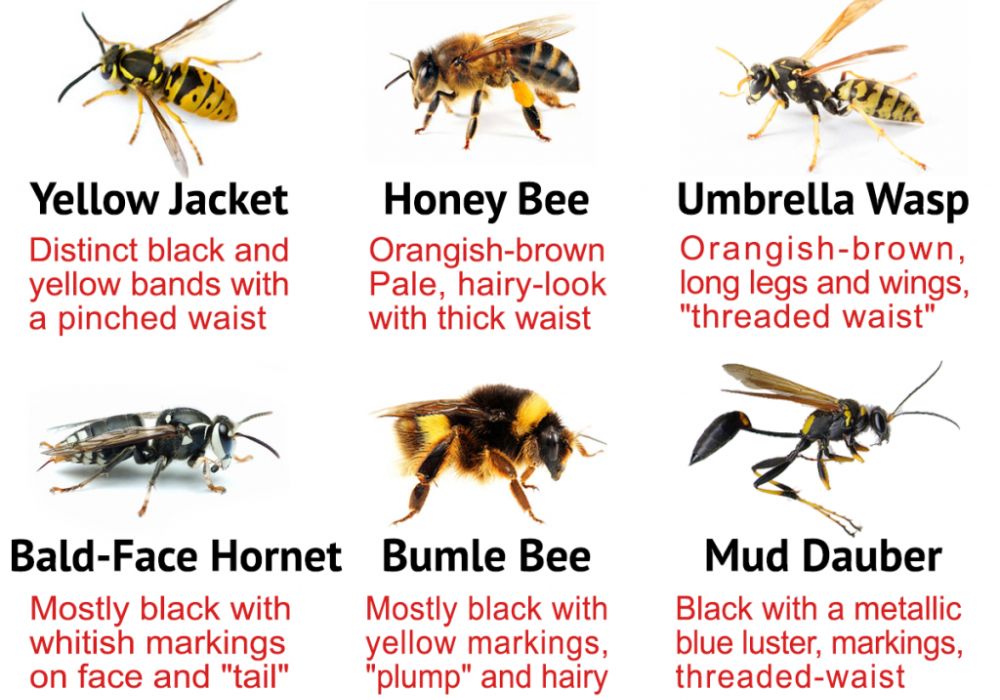
Black Wasp and Mud Daubers In Texas Identification and Prevention! How They Impact You

Identifying Black Wasps and Mud Daubers in Texas

It’s not a good experience to find black wasps in Texas if they start gaining entrance into the house. They are often mistaken as pests as t

Types of Wasp in Texas - Identification and Prevention of Wasps - Brady Pest Control

hey are small and black. Brady Pest Control in Grand Prairie Tx helps you to eliminate black wasps from the house.

The most common types of black wasps in Texas are:

  • Great Black Wasp: They are huge, with a big, robust black body. 
  • Blue Mud Dauber: Slightly smaller, metallic blue.

What Are They Doing in Your Home?

Black wasps may be interested in more than just the structure of your house. They might find areas inside your home, attics, garages, and all other secluded places where black wasp-like insects are found. Black wasps might enter your house:

  • To find an escape point.
  • To build a nest.
  • To look for insect carcass to feed on.
  • Other insects preyed on them.

Be aware of black wasps swarming in the attic and the garage. Contact Brady Pest Control today to get help!

How to Eliminate Black Wasps?

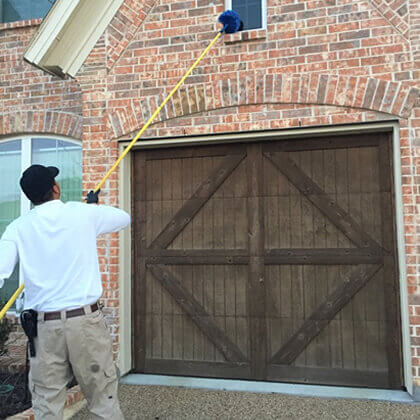
Brady Pest Control eliminating wasps

Here’s how to eliminate black wasps from your house:

  • Seal Entry Points: Seal cracks and crevices around windows, doors, and the foundation. It helps keep wasps from entering.
  • Keep Your Home Clean: Ensure that no food crumbs are left, which would attract other insects.
  • Maintain Your Lawn: Eliminate standing water. Trim shrubbery and trees so that they are reduced for several nesting places.
  • Screens: Replace screens in windows and vents to prevent entry by tiny black wasps.
  • Professional Help: Seek professional help. Call Brady Pest Control in Grand Prairie Tx to treat and remove black wasps.

How do they Impact You?

A black wasp will sting if provoked, which is quite painful. They are not aggressive; it is best not to disturb a nest. Some people are allergic to wasp venom and can go into anaphylactic shock if stung. If you find a nest contact a pest control professional for safe removal. Black wasps address other issues:

  • Their diet consists of spiders and other insects.
  • It could indicate that you have other pests inside the house.

Final Words!

Identifying and preventing black wasps in Texas involves understanding their habits and taking proactive measures. One has to eliminate tiny black wasps from their houses by sealing major entry points, tidying the place up, and controlling other problematic pests. 

For professional help, contact Brady Pest Control from Grand Prairie, TX. Fill out our form or Call 817-714-5875 today.  Always remember that a pest-free home requires regular maintenance and care. Be observant; with a little effort, you are a step closer to having a hassle-free home from wasps. You can also read our blog on How Much Wasp Nest Removal Cost in Grand Prairie, Tx 2024?

Black Wasp FAQs

Are Black Wasps Harmful?

The sting of a black wasp can be painful. They are not considered dangerous.

What Is the Black Wasp Bug in Texas?

Black wasps in Texas are cricket hunters. They are named for stinging crickets, grasshoppers, or katydids.

How Do You Get Rid of Black Wasps in Texas?

– Seal cracks and crevices.

– Keep your home clean.

– Remove standing water.

– Trim bushes and trees.

– Use screens on windows and vents.

– Contact professional pest control if necessary.

What Happens If You Get Bit by a Black Wasp?

You may experience pain, swelling, redness, itching, heat at the sting site, and potentially hives if there is an allergic reaction.

Black Bug That Looks Like a Wasp?

The Great Black Wasp, known scientifically as Sphex pensylvanicus, is a species of digger wasp or mud dauber.

Most Common Types of Lawn Bugs: How to Fight Them in 2024 Detailed Guide

A healthy lawn is beautiful at first glance. Pests can destroy it before you know it. Brady Pest Control in Grand Prairie, TX deals with lawn insect infestation. Knowing these bugs that destroy grass can help you maintain a healthy lawn. Here are different types of lawn insects. 

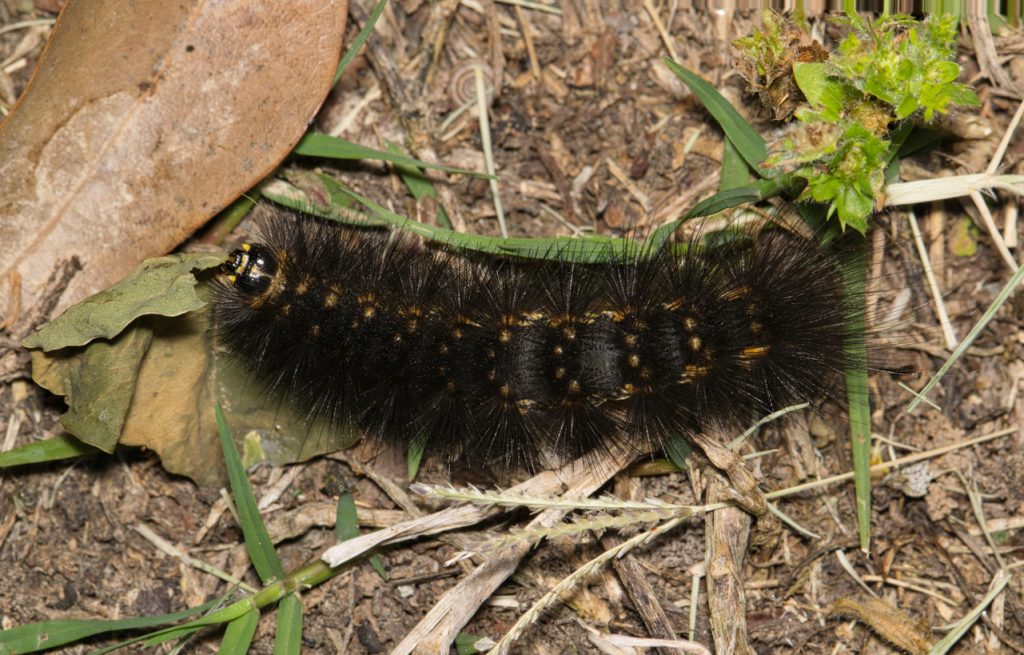
Salt marsh moth caterpillar eating dead leaves on ground.

Types of Lawn Bugs 

Various types of lawn bugs can damage your lawns. Grubs, chinch bugs, and armyworms are the most common yard bugs. Lawn insect identification is crucial. It controls the bugs that eat grass.

Grubs Bugs: How to Control Them

How to Control Lawn Grubs - Brady Pest Control

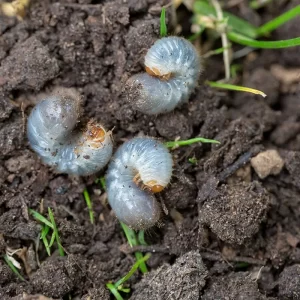
Grubs are white and C-shaped. They inhabit the soil. Grubs consume grass roots.

Damage: A brown lawn is a sign that it has grubs. Soft grass can be pulled off the wet surface easily.

Control: Apply products for grub-killing in the fall. It is a kind of good worm called nematodes. A deep watering of your lawn will make the roots grow deeper

Chinch Bugs: How to Control Them

Chinch Bugs How to Control Them - Brady Pest Control

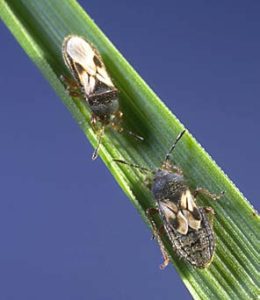
Chinch bugs are little black insects with white wings. They usually reside in areas where there is a lot of sun.

Damage: They suck the sap from the leaves. They are yellow, and then they die.

Control: Water your yard thoroughly. Use insecticides, if the infestation is severe. Mow your lawn regularly. Avoid over-fertilizing.

Armyworms Bugs: How to Control Them

Armyworms bugs how to control them - Brady Pest Control

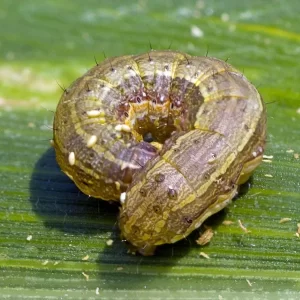
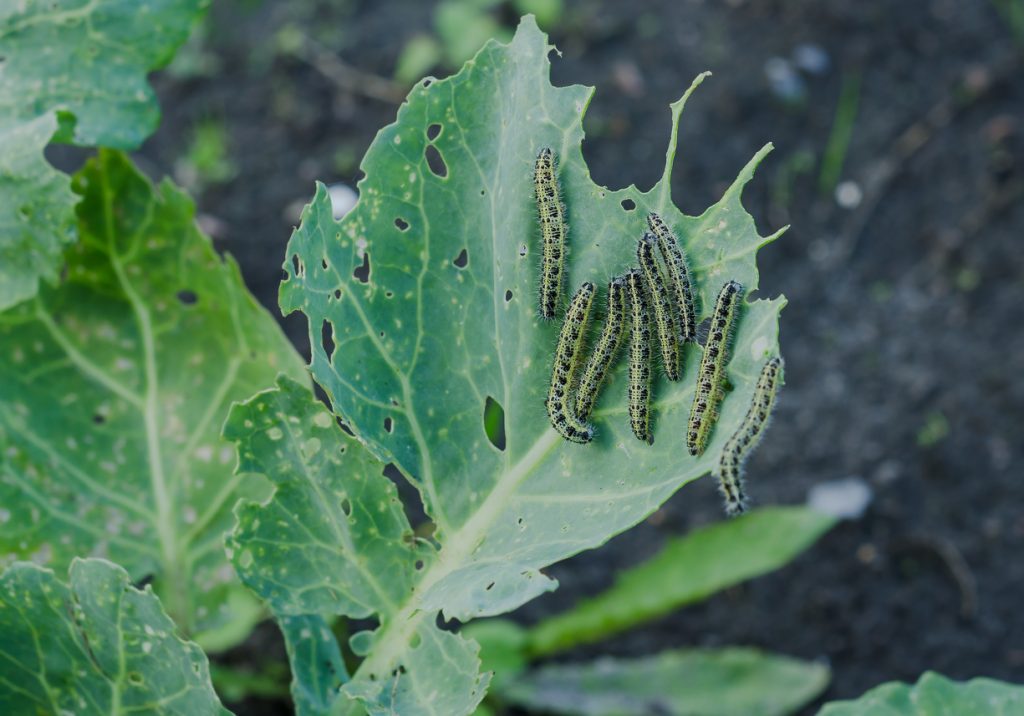
Armyworms are caterpillars with green, brown, and black stripes. They march in big groups.

Damage: They feed on residues of mature grass. They create bare patches.

Control: Be attentive to your lawn. Apply the insecticides in the early morning or late evening when the armyworms are active. Beneficial bugs and birds are used to control these bug species.

Sod Webworms Bugs: How to Control Them

Sod Webworms Bugs How to Control Them - Brady Pest Control

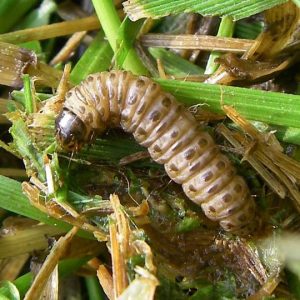
Larvae of lawn bugs are sod webworms. They are tiny and yellowish brown. They are located in covered tracks on the lawn. 

Damage: They bite off grass leaves creating distinct patches that become larger with time. 

Controls: Always water your lawn. Insecticides should be sprayed late in the evening when the larvae are feeding. You may want to encourage birds into your lawn because they eat these insects known as sod webworms.

Billbugs  Bugs How to Control Them

Billbugs  Bugs How to Control Them - Brady Pest Control

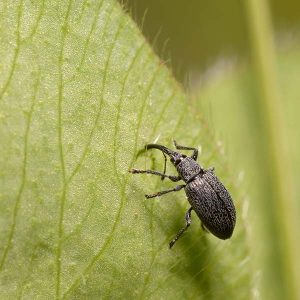
Billbugs are a type of beetle that is small and gray or black. The larva is brown-headed and white. 

Damage: The adults chew on grass stems while the larvae eat the roots. It leads to wilting and death of grass. 

Control: Regularly aerate your lawn to improve the soil’s condition. Insecticides can be used in case damage is detected. A well-maintained lawn reduces stress on the grass.

Preventative Measures

To keep lawn insects at bay, follow these general steps: 

Mow Regularly: Keep grass at the recommended height based on your lawn type. 

Water Properly: Water deeply. Water it less frequently to promote deeper root growth. 

Fertilize Wisely: Use the correct amount of fertilizer without attracting pests. 

Aerate the Soil: Lawn aeration makes it more resilient by allowing water and nutrients to penetrate the grass roots. It is resistant to drought stress.

Final Words!

Keep your grass healthy. Call Brady Pest Control in Grand Prairie, TX for assistance. Call 817-714-5875 or fill out this form for more information. Always protect your lawns against the bugs that eat grass.

Lawn Bugs FAQs

What is the bug that destroys lawns?

Common bugs that destroy lawns are grubs (beetle larvae). 

How to identify lawn insects?

iStock 587940606 1

You can identify lawn insects by; 

  • Examining whether the grass has gone brown.
  • Patches have appeared.
  • The insects are visible.
  • Use a magnifying glass.
  • Seek an expert for precise identification.

What bugs are in my yard?

Grubs, chinch bugs, armyworms, sod webworms, and billbugs are some of the most common yard insects.

What insect lives in the grass?

In the grass reside armyworms and fiery skipper caterpillars.

What does a lawn bug look like?

Lawn bugs vary: 

  • Grubs are white and C-shaped.
  • Chinch bugs are tiny and black with white wings.
  • Armyworms are striped caterpillars.

What kills lawn beetles?

Acelepryn (Chlorantraniliprole) is a pesticide that eradicates lawn beetles.

What are the most common lawn grubs?

Japanese beetle larvae, leather jackets, and chafer larvae are common lawn grubs.

What is chewing up my lawn?

Armyworms, sod webworms, and billbugs chew up your lawn.

Protect your lawn now. Contact Brady Pest Control for help!

How Much Wasp Nest Removal Cost in Grand Prairie, TX 2024?

The biggest concern for people in Grand Prairie, Texas for a wasp nest invasion is how much it would cost them to remove it. Individuals can make informed decisions to efficiently deal with the issue when they are well-versed in these costs. Brady Pest Control in Grand Prairie, TX. offer the affordable wasp nest removal cost.

Factors Affecting Wasp Nest Removal Cost

  1. Severity of Infestation

The cost of removal is determined by how far the infestation has spread. There are more wasps in big nests. It will take longer to remove them. Eradication requires investing in it. Consequently, this results in increased costs.

  1. Nest Location

Nest location affects removal expenses. In areas like attics, chimneys, or inner wall nests might need particular devices and methods. This results in higher prices.

  1. Treatment Method

The method chosen for removing the nest impacts the total cost. Traditional treatments like insecticides or aerosol sprays can be adopted. They cost less than other ways of doing away with nests. 

  1. Type of Wasp

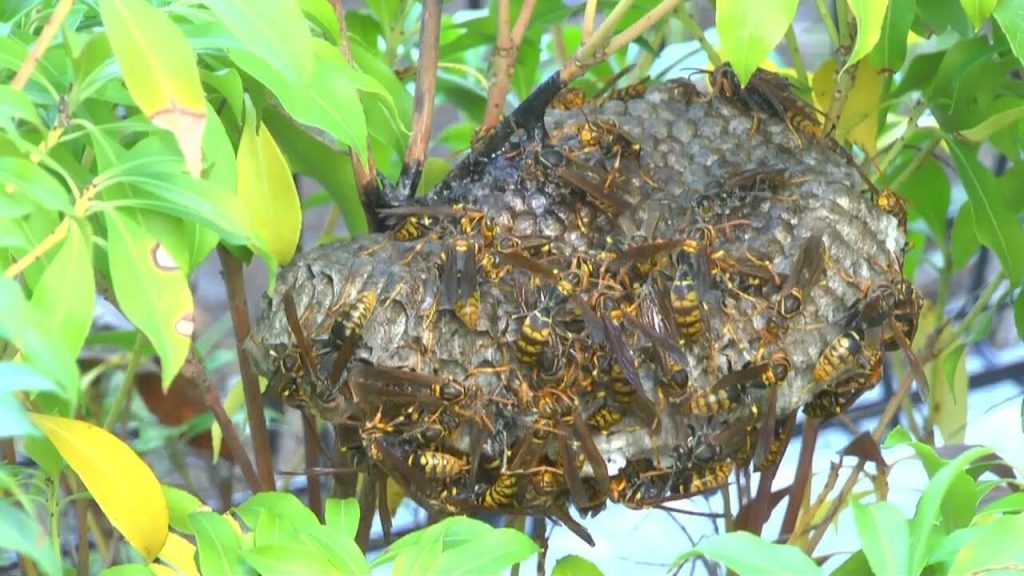
There are different levels of aggression and nuisance caused by various kinds of wasps. Wasps such as yellow jackets, are known for their aggressive behavior. They are associated with higher costs and the need for more advanced methods of control than other species that are less aggressive.

  1. Service Provider

The reputation and experience of a company that controls pests affect how much it charges. Firms that have existed for a long time and have experienced employees may demand more money from their customers. 

Don’t Wait! Remove wasps and call Brady Pest Control today. 

Average Cost Range of Wasp Nest Removal in Grand Prairie, TX

Average Cost Range of Wasp Nest Removal in Grand Prairie, TX

Average Cost of Wasp Nest Removal

In Grand Prairie, TX, the typical price for a professional wasp nest removal is about $383, but prices vary widely from $100-$1300 due to several factors.

Paper Wasps or Red Wasps

Removal costs usually are from $100 to $300.

Mud Daubers

Removal of mud dauber nests varies between $100 to $300.

Bald-faced Hornets

Expect removal costs between $300 and $800 for bald-faced hornet nests.

Yellow Jackets

Removal services for yellow jacket infestations may start at $300 and could reach up to $800.

Schedule your wasp nest removal with Brady Pest Control today!

Common Removal Methods

  1. Aerosol Sprays and Insecticides

The easiest and least expensive method is spraying aerosol or concentrated liquid insecticides directly into the nest. This method is efficient because it kills wasps when in direct contact and destroys those that will return later.

  1. Vacuuming

Eliminate wasps from small places. Vacuum cleaners are preferred by experts when the infestation is serious. This method will cost more as it needs gadgets.

  1. Eco-Friendly Treatments

There are eco-friendly techniques that are expensive. These treatments get rid of wasps and do not cause too much damage to the environment.

Choosing the Right Pest Control Service

It’s important to consider wasp nest removal prices when selecting a company to help with wasps in Grand Prairie, TX. They will remove nests responsibly from your garden while observing all safety measures. Compare what people charge. Request quotes, and you will be able to determine which one offers the best rates.

Final Words!

Numerous factors determine how much it costs to remove wasp nests in Grand Prairie, TX. For this reason, it is important to look for a reputable professional because their rates start from as low as $100 up to approximately $800. 

One of these cheap yet quality strategies for handling such situations is through Brady Pest Control services in Grand Prairie TX. You can contact us by either filling out this form or dialing 817-714-5875.

Why are Ants in My House? How Do I Get Rid of Them 2026?

The invasion of ants in your house is a nuisance. You ought to have a well-defined reason why they are there. In this article, we will talk about the reasons for their existence in your house. Brady Pest Control in Grand Prairie, TX, is the trustworthy service to make your home ant-free.

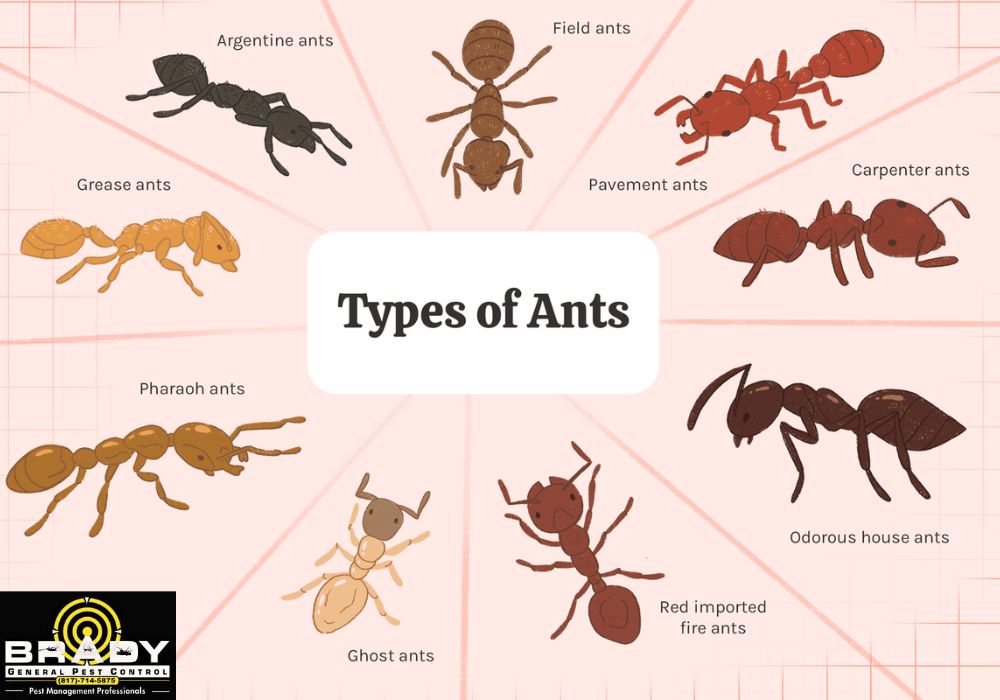
Types of Ants:

Types of Ants - Brady Pest Control

Acrobat Ants (Crematogaster spp.):

They are well-known for their capacity to raise their abdomen over their thorax and head.

Carpenter Ants (Camponotus spp.):

Carpenter Ants are the ones who inhabit wood. They cause structural damage.

Fire Ants (Solenopsis invicta):

They are famous for their painful stings and the big mounds.

Pavement Ants (Tetramorium caespitum):

Pavement ants build nests under sidewalks, driveways, and foundation slabs.

Argentine Ants (Linepithema humile):

 Argentine ants form huge colonies. They substitute the indigenous ant species.

Odorous Ants (Tapinoma sessile):

These cause a smell when crushed. They mostly go to kitchens to forage. 

Pharaoh Ants (Monomorium pharaonis):

Pharaoh ants Nest in the areas that are warm and humid. It is difficult to get rid of them. Read our latest post on 08 Infestation Signs of Carpenter Ants in House?

If you are living in Grand Prairie and the surrounding areas, then you can get our ant control services:

Why Are Ants in My House?

Get Rid of Ants in Grand Prairie, TX

Here are some common factors that attract ants to your living space:

Food Attraction:

The ants are motivated by the quest for food. Any food sources that are present in your home attract ants. The crumbs on countertops spilled liquids, or unsealed food containers can be a source of attraction for ants. you can read our latest post on How to Get Rid of Red Ants Outside Permanently from Your Home?

Water Source:

Ants require water for their survival. Places that are moist, for example, kitchens, bathrooms, and leaky pipes are the areas that supply ants with basic hydration. It makes these areas the main places for infestation.

Warmth and Shelter:

Your home provides ants shelter. It protects ants from extreme weather, predators, and natural enemies. The indoors offer warmth and shelter. It attracts a colony of ants to your living space.

Scent Trails:

Ants communicate using chemical trails. They leave behind pheromones for the members of the colony. They follow the food sources. When a few ants find a food or water source in your home, they create a scent trail for other ants to follow. It results in a never-ending flow of invaders.

Nesting Opportunities:

Ants look for hidden places to set up their homes. Little cracks, crevices, and voids in walls, floors, and foundations are the perfect places.  Ants can establish their colonies and reproduce there. 

Take control of your home today! Contact Brady Pest Control for ant elimination!

How to Get Rid of Ants?

Eliminate Food Sources:

Keep surfaces clean. The food should be stored in airtight containers. Clean spills quickly.

Seal Entry Points:

Seal cracks, gaps, and openings. Ants can come into your home through them.

Use Ant Baits:

Put ant baits near ant trails. It entices the ants and wipes out the whole colony.

Maintain Cleanliness:

Clean your home regularly. It eliminates the possible ant habitats.

Professional Assistance:

Look for help from pest control experts like Brady Pest Control for ant eradication.

You can Read Our latest Post on:

How to Get Rid of Tiny Ants in House?

How to Get Rid of Tiny Ants in Kitchen

Get Help from Brady Pest Control!

Brady Pest Control gives the best solutions for ant control in Grand Prairie, TX. It fits the needs of your particular infestation. Reach us now. Keep your home ant-free and your family safe. Fill out our form or call at 817-714-5875 now!