
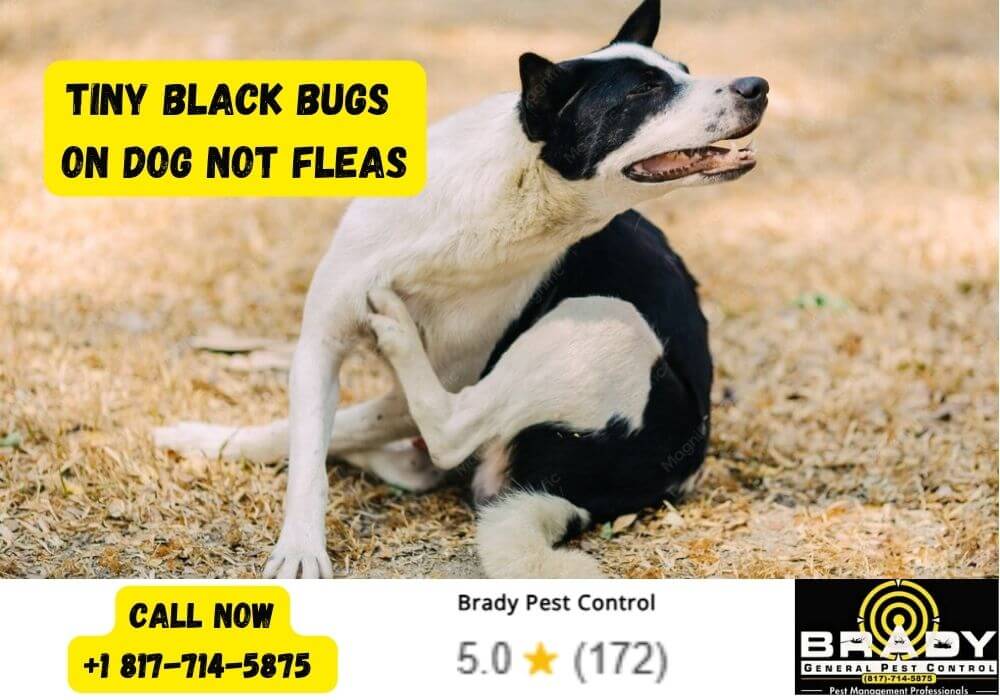
When you notice tiny black bugs on your dog, it can be concerning, especially if they are not fleas. These tiny pests could be caused by several different types of parasites and insects that are common in dogs. But don’t worry! Understanding the root cause is the first step in eliminating these bugs and preventing their recurrence.
Call us today or fill out our online form for a free inspection and quote for Tiny Black Bugs.
What Are These Tiny Black Bugs on My Dog?

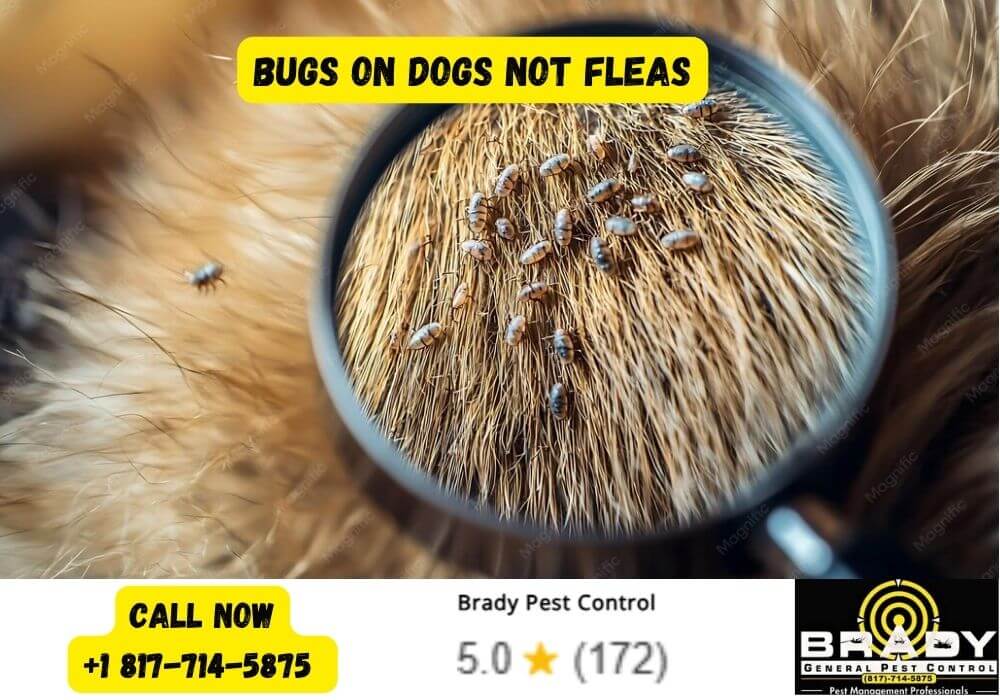
Different insects and parasites could cause tiny black bugs on your dog that are not fleas. Here are some common culprits:
Mites:
- Ear Mites: These microscopic pests live in the ear canal, causing irritation, redness, and discharge. Your dog might shake their head or scratch their ears excessively.
- Demodex Mites: These mites are found on the skin and can lead to bald patches, redness, scaling, and irritation.
- Grass Mites: Often found in your dog’s coat after outdoor play, these mites can cause itching, redness, and swelling.
Ticks:
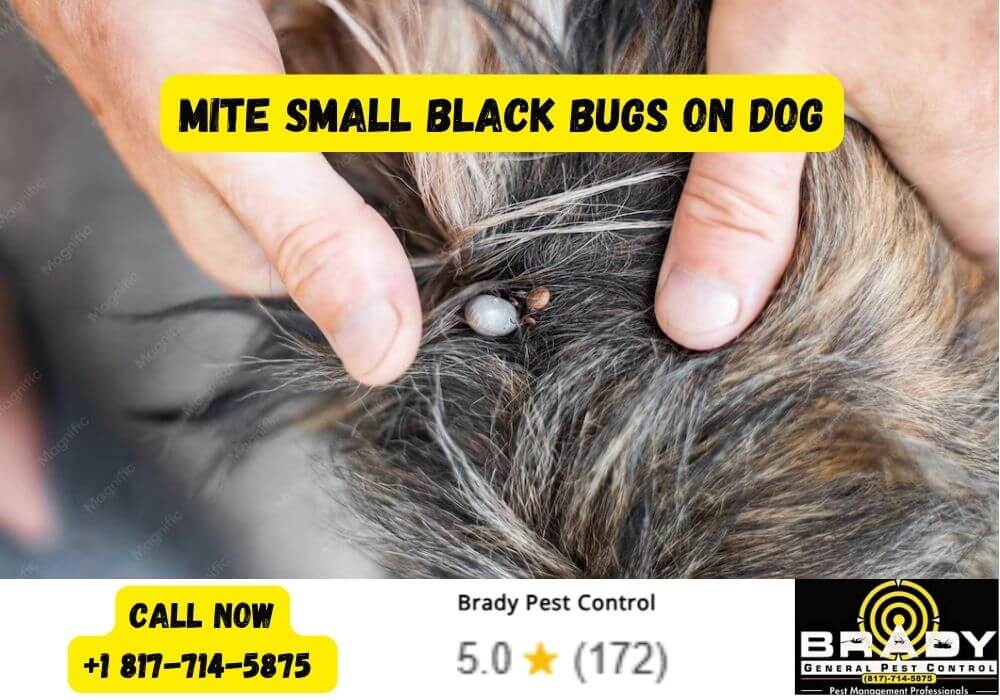
- Baby Ticks: These small ticks can be very difficult to spot. They can attach themselves to your dog, causing itching and irritation.
Other Insects:
- Lice: These tiny, wingless insects can infest your dog’s coat and cause itching, hair loss, and irritation.
- Aphids: While these are tiny soft-bodied insects, they are not harmful to dogs, but they can sometimes be found on your dog’s coat.
- Springtails: These small jumping insects can be mistaken for fleas. However, they do not pose any harm to your dog. You can also read our latest post on Blown-in Insulation Near Me in Grand Prairie
Flea Dirt Can Look Like Tiny Black Bugs
Even if you don’t see any fleas, the black dots can actually be flea dirt. Flea dirt is essentially digested blood from the fleas themselves. Put a few of the dots on a damp piece of white paper towel and see if they turn a reddish brown color.
This is crucial to know because dealing with the dots won’t help fix your problem.
Other Outdoor Insects
However, not all small black insects found on a dog are parasites.
- Aphids: These insects that feed on plants can end up on a dog after some time outdoors, although they usually do not reside on dogs.
- Springtails: These small jumping insects might be confused with fleas but usually do not infest dogs and feed on them.
If the bugs vanish when the dog gets inside and there are no signs of skin irritation, there is a possibility that the bug is an outdoor one.
In case you notice small black bugs outside your house, schedule a pest inspection.
Symptoms of Tiny Black Bugs on Dogs

- The look of the bug is just the first indication. Observe your pet’s skin and behavior for changes.Indications may consist of:
- Chronic itching/scratching
- Licking/biting
- Redness/inflammation
- Hair loss
- Crusting/scabbing
- Dry/rough/matted hair
- Ear discharge that is dark in color
- Skin with an odor
- Small sores
- Restlessness after outdoor excursions
A professional vet will need to examine your pet in case he displays any of the indications listed above since these can also occur due to allergies, infections, and parasitic infestations.
Read Our Latest Post on: How to Get Rid of Small Black Bugs in House
How to Get Rid of Tiny Black Bugs on Your Dog?

Determining which medication is suitable for your dog will depend on the cause of the issue. There is no one product that will safely remove all kinds of parasites from your dog.
1. Identify the Bug or Parasite
It will first be better if you brush the dog using a fine-toothed comb in proper lighting. The important thing to remember about this process is that you should look at the skin beneath the fur.
A vet may use various methods to identify mites, lice, infections, or other problems such as scraping the skin of your dog, taking samples of hair, taking swabs, etc.
2. Apply Veterinarian-Approved Medication
Your pet may need topical or oral medication, medicated shampoo or any kind of parasitic treatment. It is possible that certain treatments will help you get rid of different parasites, but you should choose these medications according to the age, weight and other factors specific to your pet.
For instance, recent FDA-approved treatments for ticks and fleas have age and weight restrictions.
3. Clean Your Dog’s Environment
Clean the bedding, blankets, toys, and anything that your dog uses for resting. Vacuum carpets, furniture, cracks, crevices, and anywhere else that your dog rests in order to get rid of the mites and lice from your pet’s environment if it is infested with them.
4. Look at the Other Pets
The mites and lice can spread from one animal to another one. Just in case you are not sure if your dog is infected by mites or lice, take it to the vet and learn how to examine other animals.
Are these parasites still troubling your house and garden? Call the pest control professionals today!
What Not to Do
Never apply any shampoo or insecticide made for humans without asking your veterinarian first, as the product that is harmless to you and your house may harm your pet. Keep in mind that one cannot assume all similar cases are alike.
Don’t assume that all cases should be treated the same way. The right identification will help you to look for an appropriate treatment option.
Read More: Tiny Black Beetles in House? How to Get Rid & Prevent Beetles
Prevention of Tiny Black Bugs on Your Dog
To prevent these tiny black bugs from coming back, follow these steps:
- Keep your dog’s environment clean. Regularly wash your dog’s bedding and toys to remove any potential pests.
- Use flea and tick prevention products as recommended by your veterinarian.
- Regularly check your dog after outdoor activities. Check for any signs of parasites, especially if your dog has been playing in grassy or wooded areas.
- Pest control service: If the infestation is severe, consider contacting a professional pest control service near you to treat your home and yard.
If you have noticed tiny black bugs on your dog, don’t panic. Identify the parasite or insect causing the issue, treat it promptly, and prevent future infestations. Regular grooming, proper medications, and pest control can help keep your dog healthy and free from unwanted pests.
Read also: How To Get Rid Of Small Black Bugs In House
When Should You Call a Pest Control Company?
The vet needs to deal with parasites attached directly to your dog. Nevertheless, pest control professionals may be of some help if the surrounding environment of your house or yard suffers from insects.
Think about getting an inspection if you are constantly seeing insects inside the house, finding any pests in places where pets rest or outdoors near the places that your dog visits.
For the residents of Grand Prairie and Dallas-Fort Worth, Brady Pest Control offers pest control services for residential and commercial properties.
Final Thoughts
Finding tiny black bugs on dog not fleas does not always mean your dog has a serious infestation. The insects could be ticks, lice, mites, flea dirt, or harmless outdoor bugs such as springtails or aphids.
The safest approach is to identify the cause before treating it. A veterinarian can diagnose parasites affecting your dog, while professional pest control can address recurring insects around your home and yard. With regular grooming, parasite prevention, cleaning, and outdoor inspections, you can reduce the chances of the problem returning.
FAQs
How do I get rid of tiny black bugs on my dog?
To get rid of tiny black bugs on your dog, use a veterinarian-approved treatment, including topical treatments, shampoos, or oral medications.
How to remove bugs on a dog?
Regular grooming, baths with medicated shampoos, and using flea and tick preventatives can help remove bugs on your dog.
How do I get rid of small black mites?
Treating small black mites involves using special mite treatment medications that are safe for dogs. Consult your vet for the right solution.
What are the little black things on my dog?
They could be ear mites, ticks, or lice. A vet will be able to identify the specific bug or parasite.
What kills mites on dogs instantly?
Certain insecticidal shampoos or topical medications can kill mites quickly. Your vet will recommend the best option for your dog.
How do dogs get black mites?
Dogs can get black mites from their environment, especially after spending time in grassy or wooded areas. Mites can also be passed between dogs in places like parks or kennels.
What is the fastest way to get rid of mites?
The fastest way to get rid of mites is to use vet-approved treatments, which could include topical medications or medicated shampoos.
Can I use human shampoo on my dog for mites?
It is not recommended to use human shampoo to treat mites on dogs. Always use dog-safe treatments prescribed by a veterinarian.
How can I prevent mites on my dog?
To prevent mites, keep your dog’s environment clean, use preventive treatments, and regularly check for bugs after outdoor activities.