
Homeowners in Mansfield, TX often panic when they spot insects around wooden structures, especially during warmer months. The most common confusion is between carpenter ants and termites—two pests that can look similar at first glance but behave very differently.
If you’re unsure what you’re dealing with, a professional pest inspection from Brady Pest Control can provide accurate identification and fast solutions.
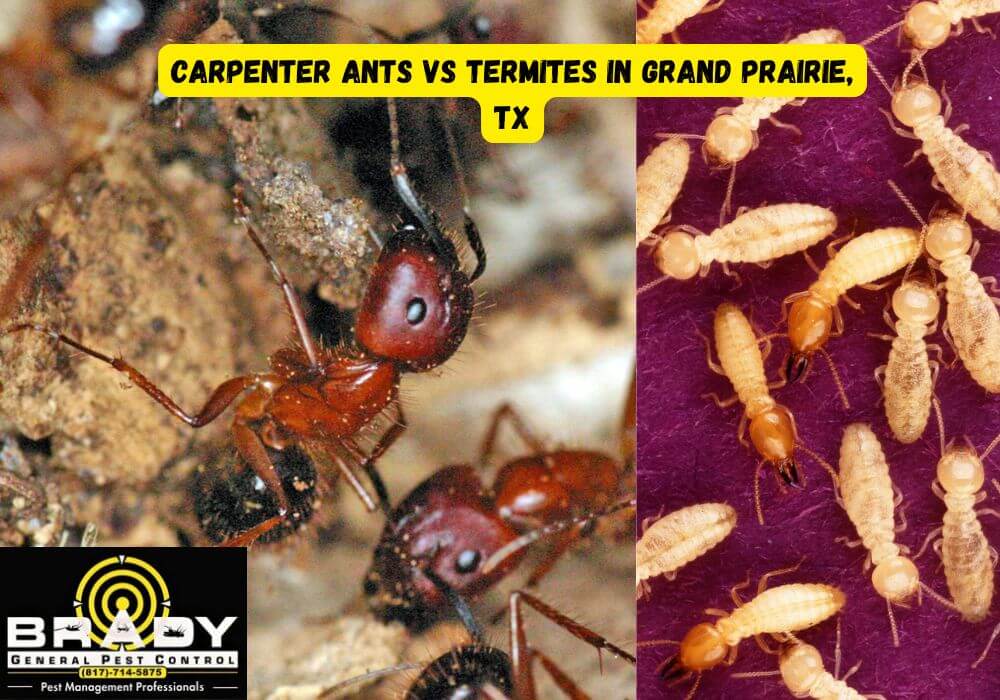
In Mansfield, TX, carpenter ants and termites are distinguished quickly by their body shape and the evidence they leave behind. Carpenter ants have pinched waists, elbowed antennae, and leave piles of sawdust (frass). In contrast, termites have straight waists, straight antennae, and create mud tubes along walls or foundations. While carpenter ants tunnel into moist wood without eating it, termites actively consume wood, leading to more severe structural damage.
Fast Identification Guide: Carpenter Ants vs Termites
Here’s a quick comparison to help you identify what you’re seeing:
| Feature | Carpenter Ants | Termites |
| Waist | Pinched/Narrow | Thick/Straight |
| Antennae | Bent/Elbowed | Straight/Beaded |
| Wings | Uneven (front longer) | Equal length (longer than body) |
| Evidence | Sawdust piles (frass) | Mud tubes/packed dirt |
| Damage | Clean, smooth, damp wood | Rough wood filled with mud |
| Activity | Often visible at night | Rarely seen, hidden |
If you’re noticing these signs but are still unsure, check out this detailed guide on tiny black beetles vs other pests
Key Differences Between Carpenter Ants and Termites in Mansfield, TX
What They Do
One of the biggest differences lies in how these pests interact with wood:
- Carpenter ants excavate wood to build nests but do not consume it
- Termites feed on wood, weakening structures over time
This makes termites far more destructive and a serious threat to your home’s foundation.
Where They Live
- Carpenter ants prefer moist or water-damaged wood, often found in kitchens, bathrooms, or near leaks
- Subterranean termites (common in Texas) live in soil and travel through mud tubes to access wood
Appearance
- Carpenter ant swarmers are typically black or reddish, measuring about ½ to ⅝ inch
- Termite swarmers are dark brown or black, around ⅜ inch long
While size differences are subtle, their body structure and wings are key identifiers.
Signs of a Carpenter Ant Infestation
Carpenter ants are often easier to detect because they are more visible.
Common Signs:
- Piles of sawdust-like material (frass) near wooden areas
- Rustling sounds inside walls
- Large black ants seen foraging, especially at night
- Moist or damaged wood areas
These ants are commonly found in homes with existing moisture issues. Addressing these problems early can prevent infestations.
Signs of Termite Infestation
Termites are more dangerous because they often go unnoticed until damage is severe.
Warning Signs:
- Mud tubes along walls, foundations, or crawl spaces
- Hollow-sounding wood when tapped
- Discarded wings near windows or doors
- Cracked or bubbling paint
Why Quick Identification Matters
Misidentifying carpenter ants as termites (or vice versa) can lead to:
- Incorrect treatment methods
- Worsening infestations
- Increased repair costs
For example, DIY methods that work for ants may not be effective against termites. Professional services ensure the right approach is taken from the start.
Schedule a professional inspection today and protect your home before minor pest issues turn into costly structural damage.
What Attracts These Pests to Homes in Texas?
Both carpenter ants and termites are drawn to similar environmental conditions:
Moisture
- Leaky pipes
- Poor drainage
- Damp basements or crawl spaces
Wood-to-Ground Contact
- Wooden decks touching soil
- Fence posts
- Tree stumps near the home
Food and Shelter
- Dead wood
- Organic debris
- Mulch close to foundations
How to Prevent Carpenter Ants and Termites
Practical Prevention Tips:
- Fix leaks and reduce moisture immediately
- Store firewood away from your home
- Seal cracks and entry points
- Keep gutters clean and direct water away from foundations
- Trim trees and vegetation near the house
Regular maintenance combined with preventative pest control services can keep your home protected year-round.
Professional Pest Control in Mansfield, TX
While minor ant issues may sometimes be manageable, termite infestations require immediate professional intervention. Experts use advanced tools and treatments to eliminate pests and prevent future infestations.
At Brady Pest Control, technicians understand the unique pest challenges in Texas homes and provide tailored solutions for both carpenter ants and termites.
Book your pest inspection with Brady Pest Control today and get fast, reliable solutions for carpenter ants and termites in Mansfield, TX.
Conclusion
Carpenter ants and termites may look similar, but their behavior, damage, and risks are very different. Carpenter ants create tunnels in moist wood without eating it, while termites consume wood and can cause severe structural damage over time.
By understanding the key differences—such as body shape, antennae, and the signs they leave behind—homeowners in Mansfield, TX can quickly identify the problem and take appropriate action.
If you notice any signs of wood-destroying insects, don’t wait. Early detection is key to protecting your home.
Contact Brady Pest Control today for expert identification and effective treatment solutions tailored to Texas homes.
FAQs
How to distinguish between ants and termites?
Look at the waist and antennae. Ants have a pinched waist and bent antennae, while termites have a straight body and straight antennae.
How do you identify carpenter ants in Texas?
They are large, black or reddish ants with elbowed antennae and leave sawdust piles near wooden structures.
What smell do termites hate?
Termites dislike strong scents like orange oil, neem oil, and garlic.
What is the fastest way to get rid of carpenter ants in a home?
Professional pest control is the fastest and most effective method to eliminate carpenter ant infestations.
What smells do carpenter ants hate?
They dislike peppermint, tea tree oil, and citrus-based scents.
Why should you not squish ants?
Squishing ants releases pheromones that can attract more ants to the area.