


As the weather warms up in Grand Prairie, TX, many homeowners look forward to spring. However, this change in seasons also brings a less welcome event: the beginning of the annual Termite Swarm Season.
If you spot a cloud of small, flying insects around your property, it can be alarming. These are often winged termites, also known as swarmers or alates, and their presence is a major red flag for homeowners.
What does the Presence of Winged Termites during Swarm Season indicate?
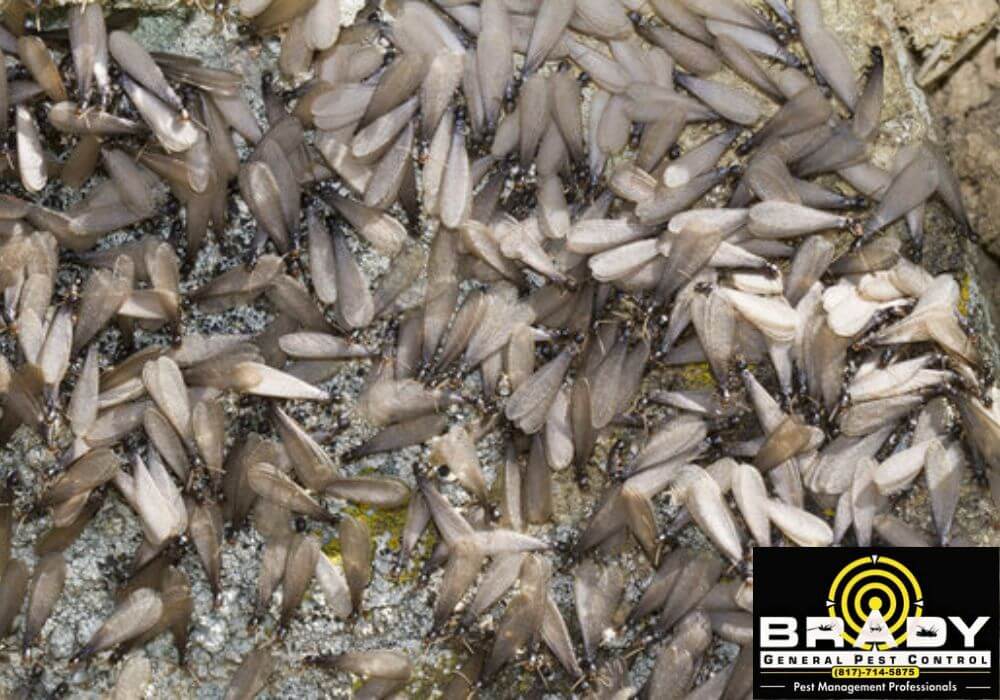
A group of winged termites is the reproductive members of a termite colony. When a colony reaches a certain age and size, typically after 3-5 years, it begins to produce these alates. Their one and only job is to leave the nest, find a mate, and establish a new colony. Read Our Latest post on Termite Season in Texas.
Here’s what their presence means for your property:
- A Mature Colony is Nearby: A swarm indicates that a large, well-established termite colony is close. This colony has grown large enough to invest energy in creating reproductive members, which means thousands, if not millions, of termites could be living just out of sight.
- A New Infestation is Possible: The swarmers are actively searching for a suitable location to establish a new nest. They are drawn to moist soil and accessible wood, making your home’s foundation a prime target.
- Existing Damage is Likely: While the winged termites themselves don’t eat wood, they are a product of a colony that does. Their presence indicates that worker termites have been active for years.
Have you noticed signs of termites? Don’t wait for the damage to get worse. Schedule a professional termite inspection today!
When Does the Termite Swarm Season Occur in Texas?
In Grand Prairie and across Texas, Termite Swarm Season is predictable. It primarily happens in the spring, with activity peaking between February and May. The specific timing is often triggered by environmental cues. Swarms are most common on warm, sunny days that follow a period of rain. The combination of moisture and rising temperatures signals to the termites that it’s the ideal time to emerge and fly.
Read Our Latest Post on Termites:
- Early Warning Signs of Termites
- Termite & Carpenter Ants Activity
- Termite Treatment Options
- Why Termites Stay Hidden From Natural Sunlight
What to Do If You See Termite Swarmers
Ignoring a termite swarm is one of the costliest mistakes a homeowner can make. These insects are a clear warning sign that needs immediate attention.
- Don’t Ignore the Signs: A swarm is your home’s alarm system for a termite problem. Acknowledge it as a serious threat to your property’s structural integrity.
- Call a Professional Immediately: The most critical step is to contact a licensed pest control expert. They have the training and tools to conduct a thorough inspection, determine the extent of the problem, and recommend an effective termite control plan. Swift action can save you from thousands of dollars in repairs.
- Look for Other Evidence: While waiting for the professional, you can look for other signs of a termite infestation. These include small, discarded wings on windowsills or near doors, thin mud tubes running up your foundation walls, and wood that sounds hollow when tapped.

Protect your biggest investment. Contact us now for a free estimate on our termite control services.
How to Make Your Home Less Attractive to Termites in 2026
While professional treatment is essential for an existing infestation, you can take steps to reduce your home’s appeal to swarmers and foraging termites.
- Turn Off Exterior Lights: During a swarm, which often happens during the day, swarmers can be attracted to lights. If you see a swarm at dusk or night, turn off outdoor lighting to avoid drawing them toward your home.
- Reduce Moisture: Termites need moisture to survive. Fix leaky faucets, repair dripping AC units, and ensure your gutters and downspouts direct water away from your foundation.
- Remove Wood Debris: Piles of firewood, old tree stumps, and other wood debris near your house are an open invitation for termites. Keep all wood stored at least 20 feet away from your home and elevated off the ground.
Frequently Asked Questions About Termites
What does it mean when you see termites with wings?
Seeing termites with wings (also called swarmer termites or alates) means a mature colony is nearby. These reproductive termites are looking for places to start new colonies. Their presence is a strong warning sign of a current or potential termite infestation.
What do termites look like in Texas with wings?
Winged termites in Texas are usually dark brown or black, about 1/4 to 1/2 inch long, and have two pairs of long, equal-length wings. Their straight antennae and wide waist help you distinguish them from flying ants, which have bent antennae and a pinched waist.
What months do termites swarm in Texas?
Termite Swarm Season in Texas is typically from February through May, often after rainfall and during warm weather. Swarms are most likely to occur in spring.
Do termite swarmers mean you have termites?
Yes. If you see termite swarmers inside your home, it’s a clear sign you already have an active termite infestation, and worker termites are likely causing damage. Even if the swarm originated just outside, your home is at high risk and needs inspection.
What should you do if you see termite swarmers?
Don’t ignore them! If you spot termite swarmers, collect a sample if possible and call a professional pest control expert for an immediate inspection. Avoid trying to eliminate termites with store-bought sprays—these don’t reach the hidden colony.
What smell keeps termites away?
Some strong smells, like those from cedarwood, tea tree, and orange oil, can help repel termites for a short time. Certain essential oils like cedarwood, tea tree, and orange oil are known to repel termites due to their strong scents. However, these are not effective for treating an existing infestation and should only be considered a minor deterrent.
Ready to secure your home from termites? Learn more about our comprehensive termite prevention plans and get peace of mind today!